Introduction: The Hidden Loss in Breadcrumb Production—Are You Losing Profits?
But before a food manufacturer can produce high-quality, uniform breadcrumbs, they must first master the art of automated toast baking. In the high-volume breadcrumb production line industry, many factory owners focus only on back-end crushing and drying.
Unfortunately, they often ignore the most critical front-end stage: the shaping quality of the raw toast. Standard semi-manual methods or outdated forming systems often cause severe weight variations and loose internal structures due to uneven roller pressure.
Consequently, when these uneven loaves enter the baking ovens, they suffer from uneven moisture distribution. This core issue directly lowers your final crushing yield, causes unpredictable crumb density, and creates massive ingredient waste.
Therefore, to help global buyers break through this bottleneck, a large food factory brought their own raw ingredients to the Wuxi Henghao Machinery Technology Co., Ltd. workshop in June 2026.
Together, we ran a comprehensive, live production trial to verify how an advanced industrial bread making machine secures stable, high-yield results.
Live Testing Process and Deep Technical Analysis
1. The Core Pain Point: Why Traditional Forming Fails Premium Breadcrumb Lines
Also, relying on manual labor or basic dual-roller systems creates three major problems for modern food plants:
-
Large Weight Errors: Manual portioning cannot control dough density after yeast fermentation, leading to massive weight errors per loaf.
-
Damaged Gluten Structure: Outdated rollers stretch and tear the gluten matrix, resulting in large, irregular holes inside the bread.
-
High Material Waste: This internal defect creates too much useless "bread powder" during final milling, slashing your profit margins.
-
Production Delays: Relying on human speed creates a severe bottleneck that limits the daily capacity of the entire factory.
2. The Smart Solution: Henghao Automated Forming Line Setup
Henghao Application Engineer's Core Conclusion: The secret to reducing oil absorption and securing the perfect crispiness of your final breadcrumbs lies in the structural uniformity of the raw toast loaf. You must use precise pressure control, consistent mixing, and smart automated cutting.
For example, during our factory test, we loaded a mass-production recipe using precise ingredient control: 50 kg of high-gluten flour, 28 kg of chilled ice water, and balanced minor ingredients.
To handle this heavy batch efficiently, we integrated a high-capacity self-tipping dough mixer at the front end to feed our continuous automatic bread production line.
(To build these heavy systems, our factory uses a professional sheet metal rolling machine to shape the rigid, industrial-grade stainless steel frames, ensuring safe 24/7 continuous operation.)
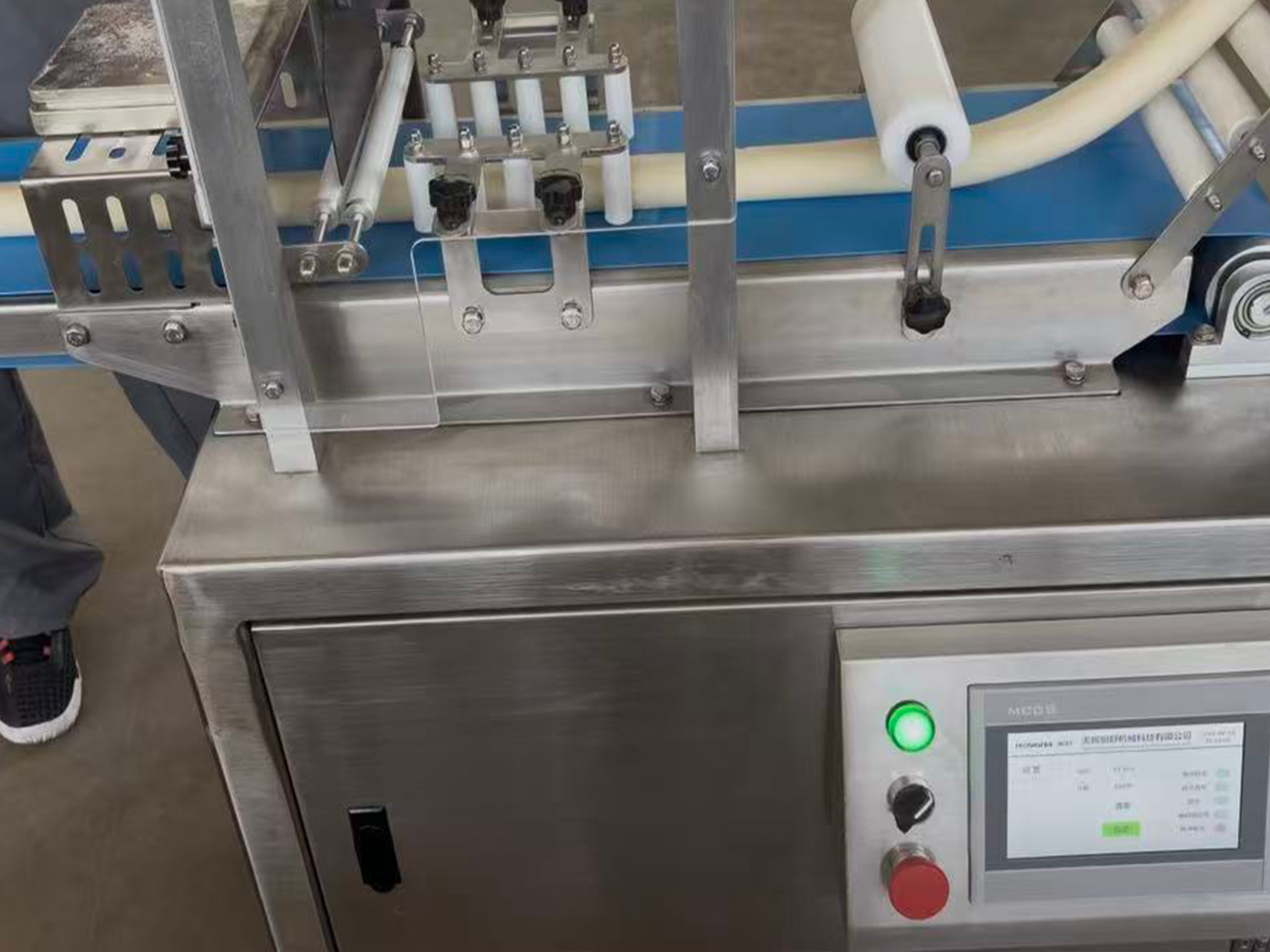
[Dough Mass] ➔ [Dough Sheeter] ➔ [Inclined Conveyor] ➔ [3-Stage Electric Dough Sheeter] ➔ [Digital Cutting Machine] ➔ [Molds]
Step 1: Heavy-Duty Mixing and Automatic Discharge
The trial started by loading the bulk materials into our heavy-duty automatic spiral dough mixer.
|
|
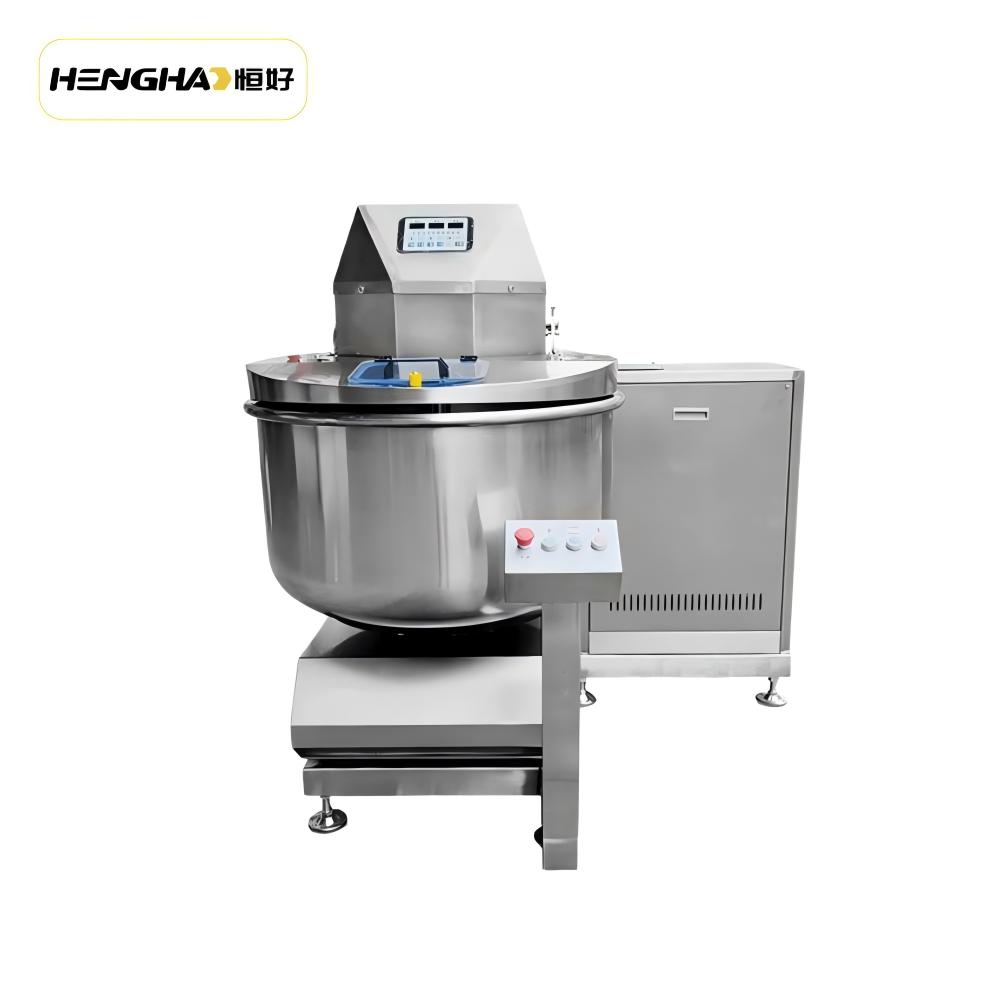
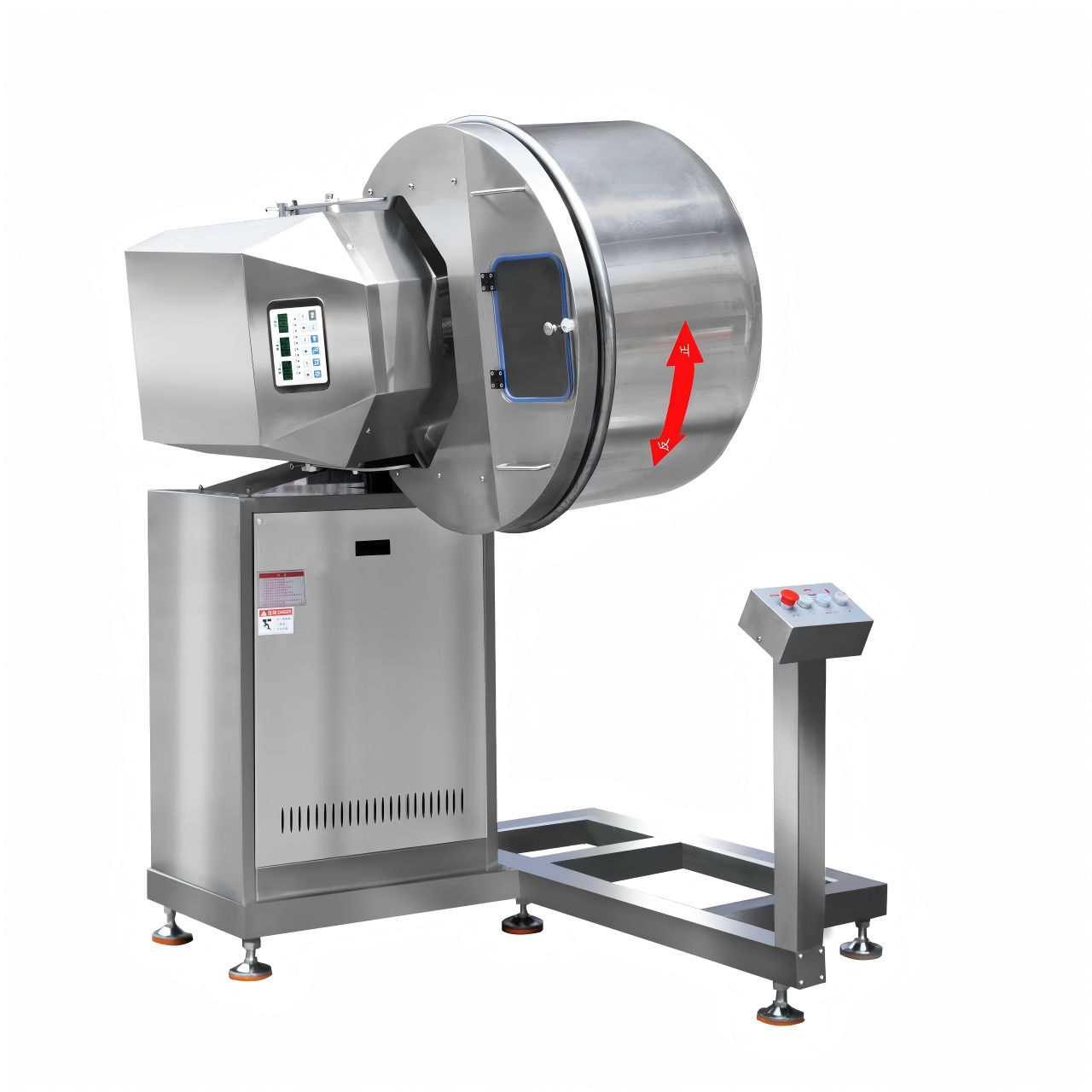
Specifically, using an industrial dough mixer with tilting hydraulic lift allowed the operator to develop a flawless gluten membrane with excellent elasticity.
Once mixed, the automatic discharge spiral mixer tilted automatically to dump the heavy dough mass into the processing line, eliminating manual lifting completely.
Step 2: Gentle Sheeting and Automatic Rolling
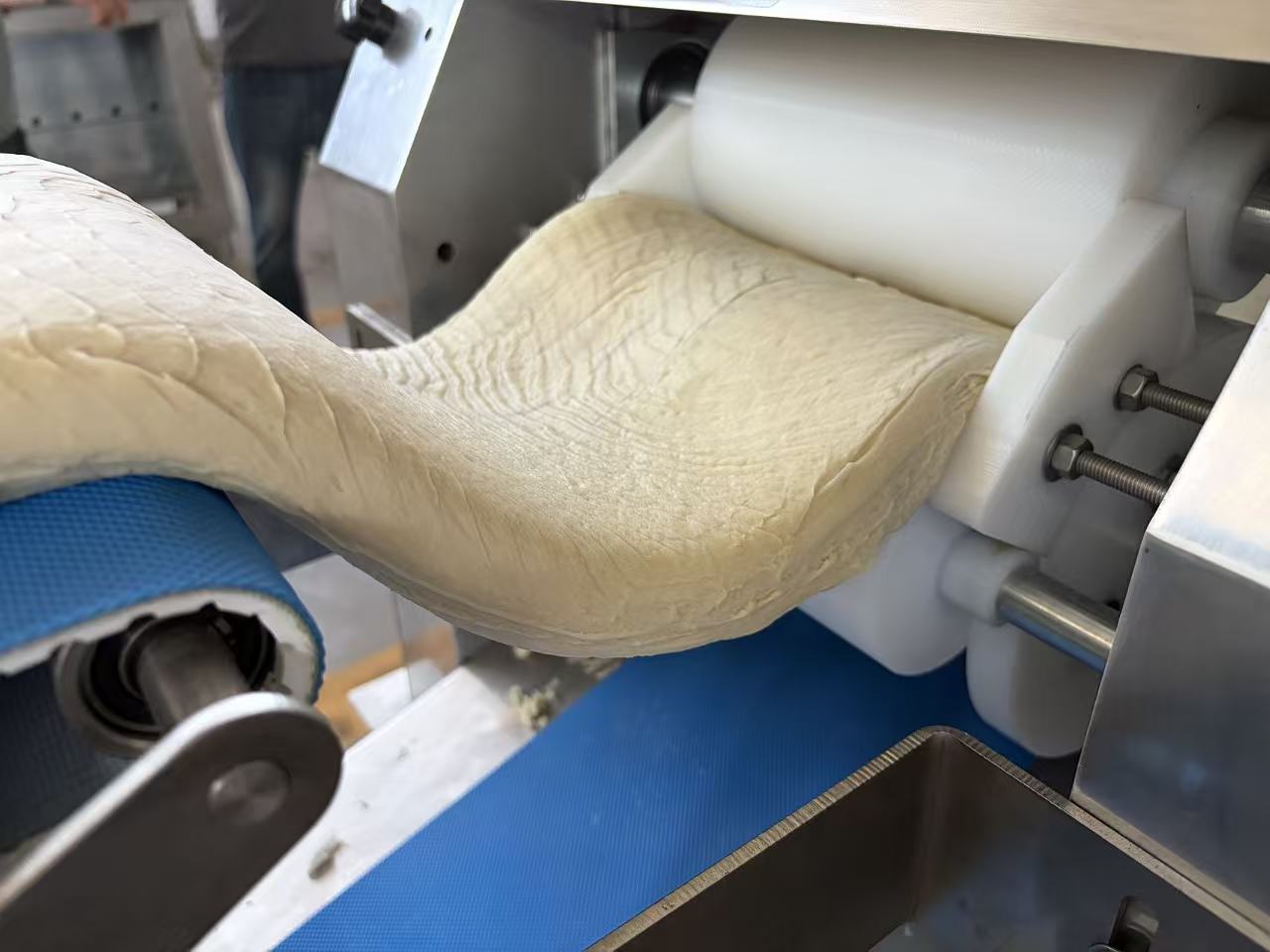
Next, the bulk dough moved through the Dough Sheeter and the Inclined Belt Conveyor without any tearing.
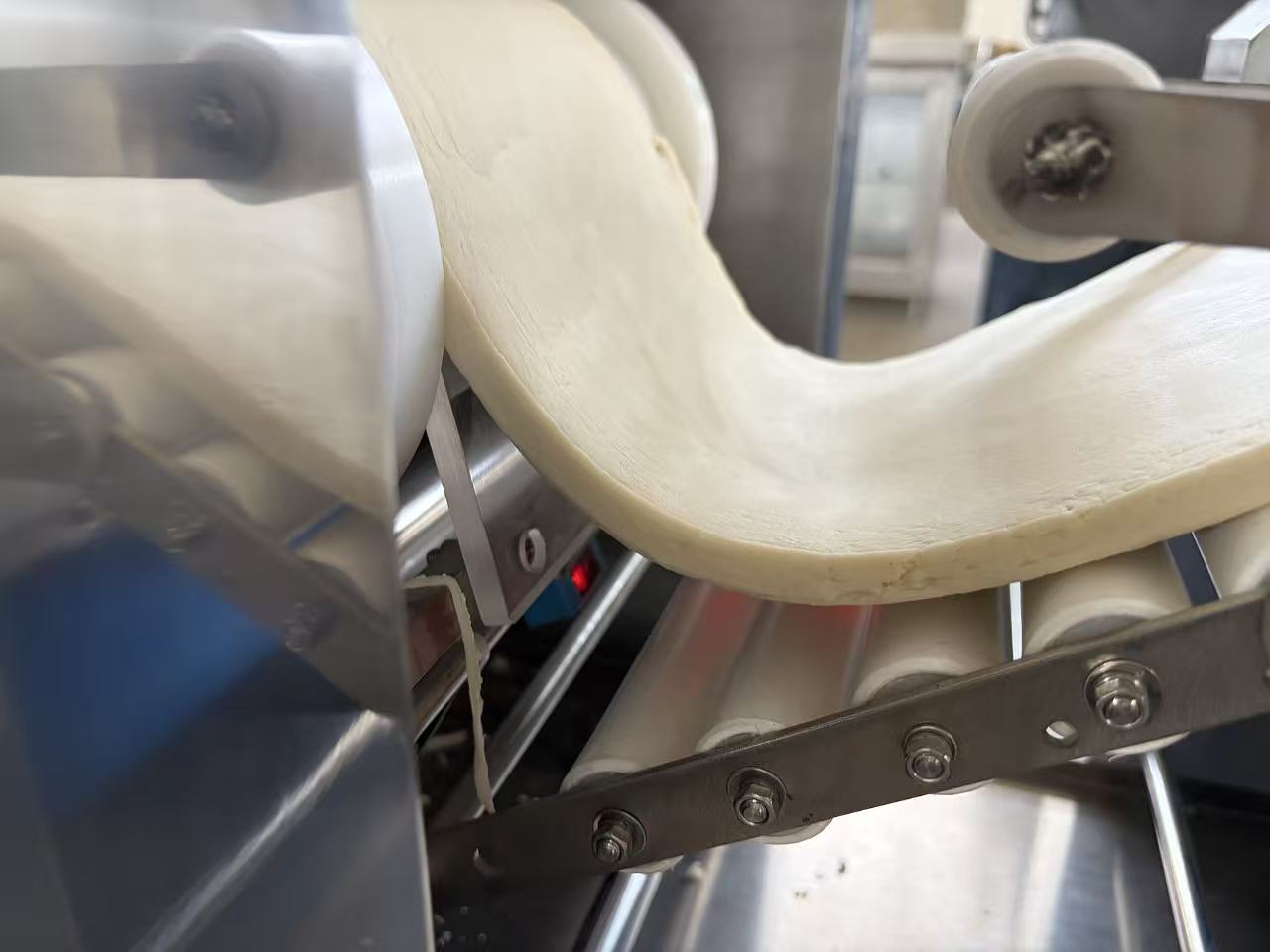
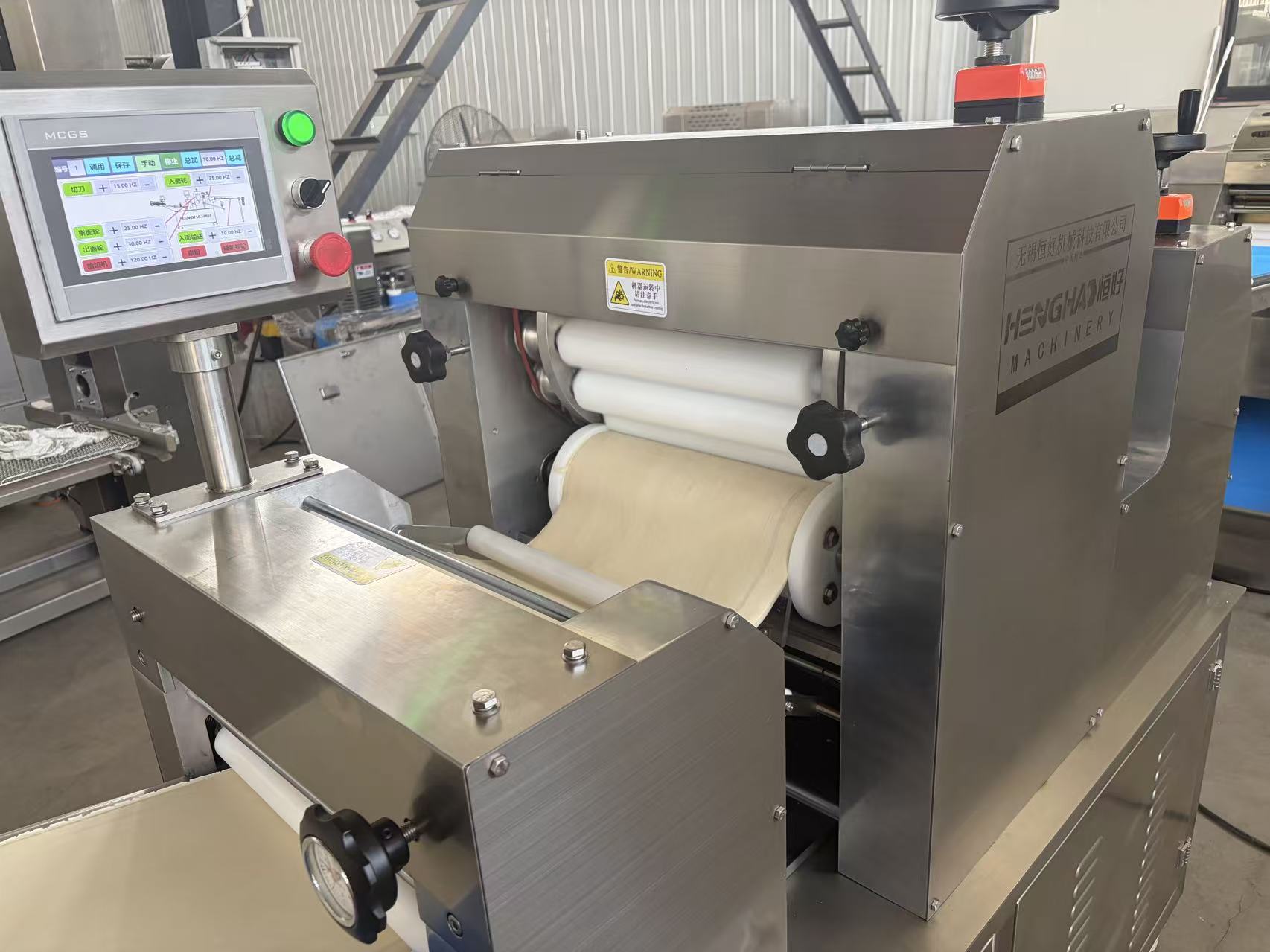
It then entered our core module: the 3-Stage Roller Sheeting Main Machine with Rolling-up Device.
This system functions as a high-precision electric dough sheeter.
It thins the dough sheet using three progressive pressure stages, removing large air pockets gently while protecting the gluten matrix before rolling it tightly.
 |
 |
 |
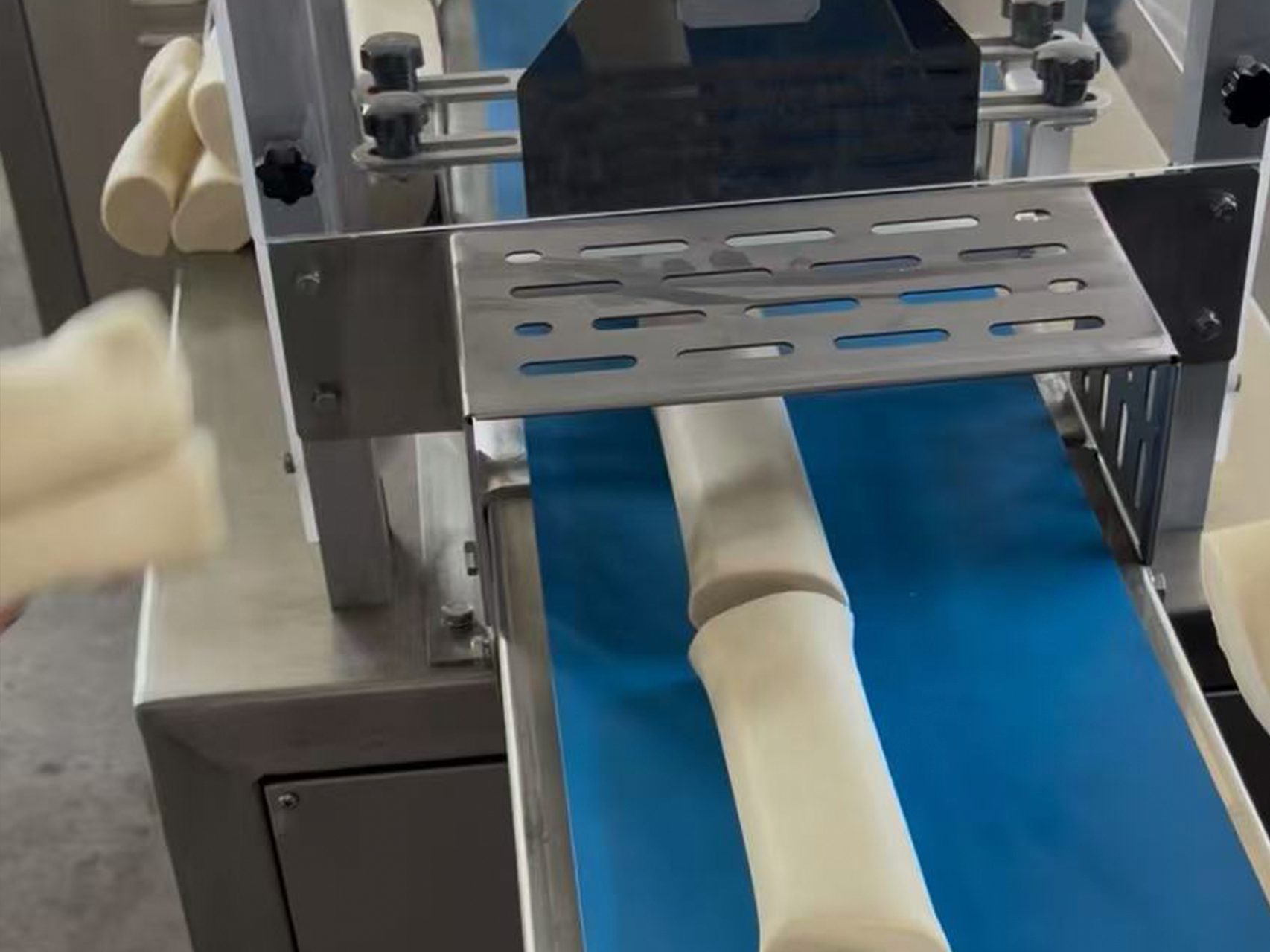
Step 3: High-Precision Digital Slicing
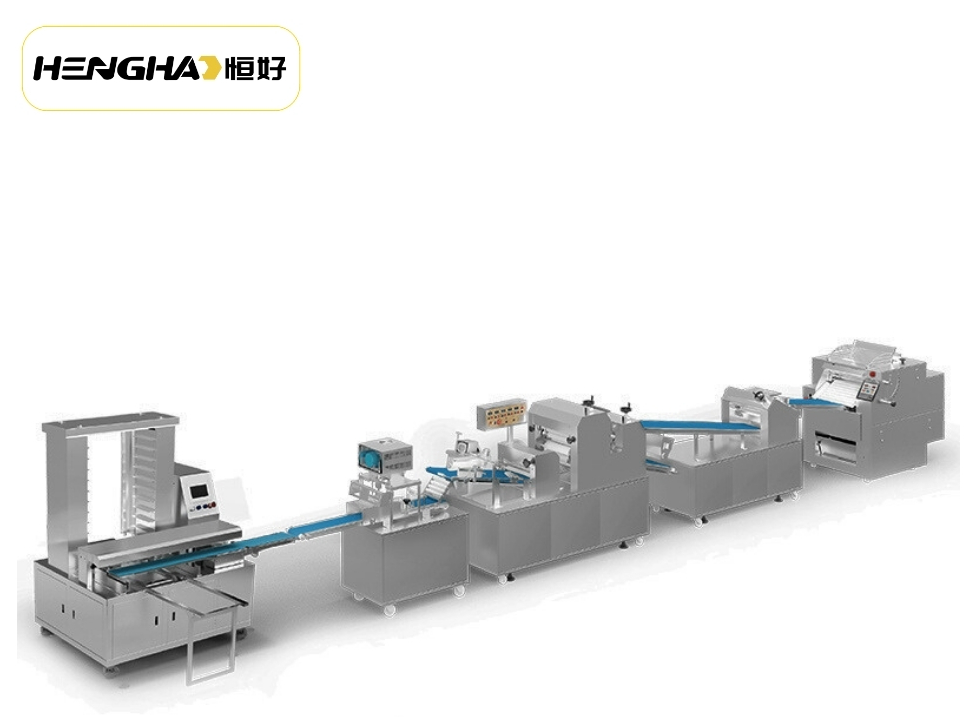
Subsequently, the tightly rolled dough logs entered our advanced Digital Cutting Machine, a core module integrated into the fully automated commercial bakery bread production line.
This smart touch-screen unit cut the dough into exact 800g individual logs with zero portioning errors, automatically aligning them into the waiting toast molds.
|
|
|
3. Strict Processing Parameters and Baking Settings
Furthermore, the portioned 800g dough logs must follow a highly controlled processing profile.
First, the automated line transfers the molded toast trays directly into a commercial proofing chamber under exact factory settings:
-
Proofer Temperature: 38°C
-
Relative Humidity: 75%
-
Fermentation Time: 50 minutes
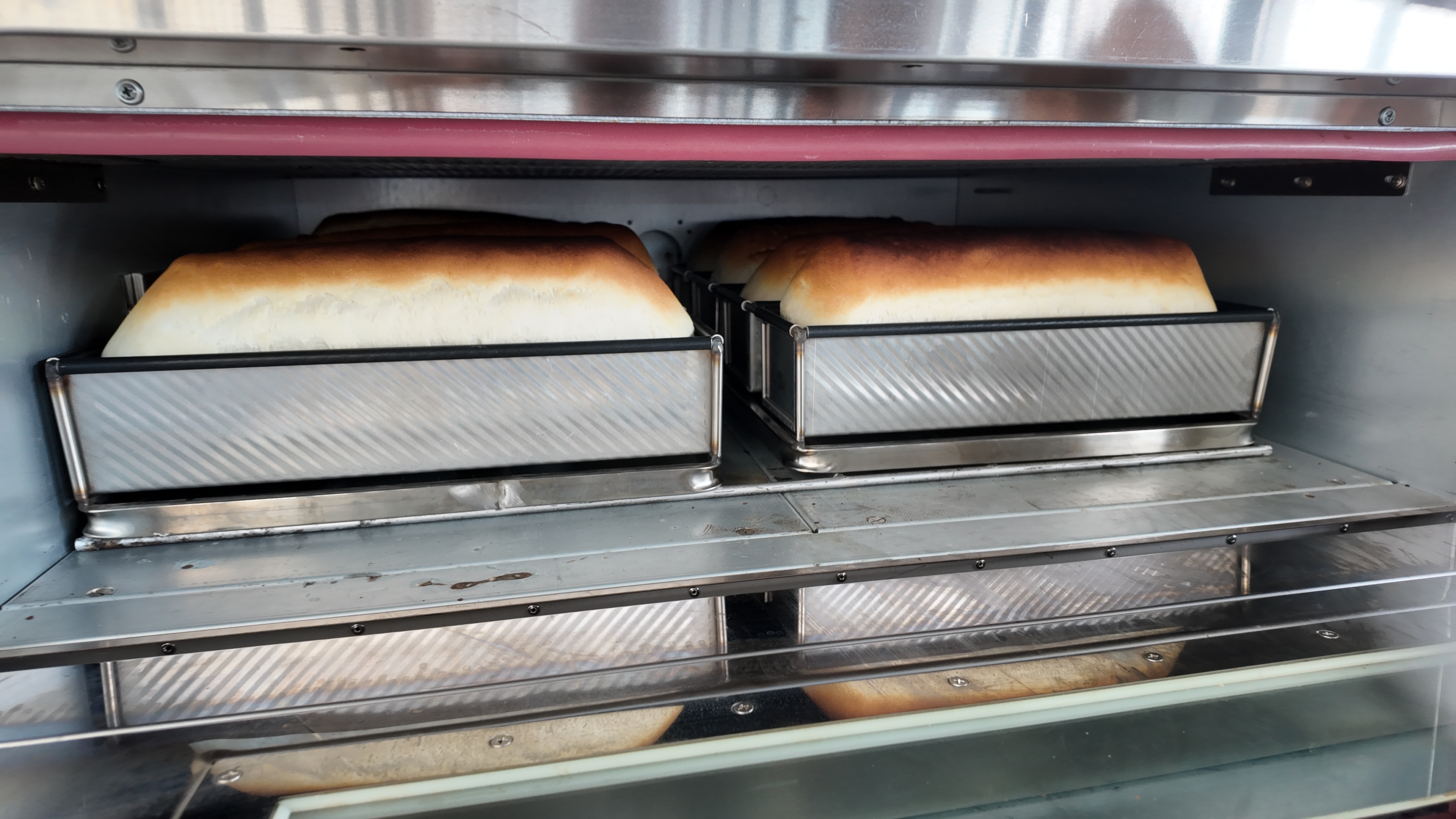
Second, after rising perfectly, the loaves enter our commercial rotary ovens (this configuration also fits large continuous tunnel ovens).
The heating elements bake the loaves using precise temperature zones to control internal moisture:
-
Top Heat Zone: 120°C
-
Bottom Heat Zone: 200°C
-
Total Baking Time: 30 to 35 minutes
Finally, right after exiting the baking oven, the hot loaves enter a cold storage room at 0-5°C for 12 hours.
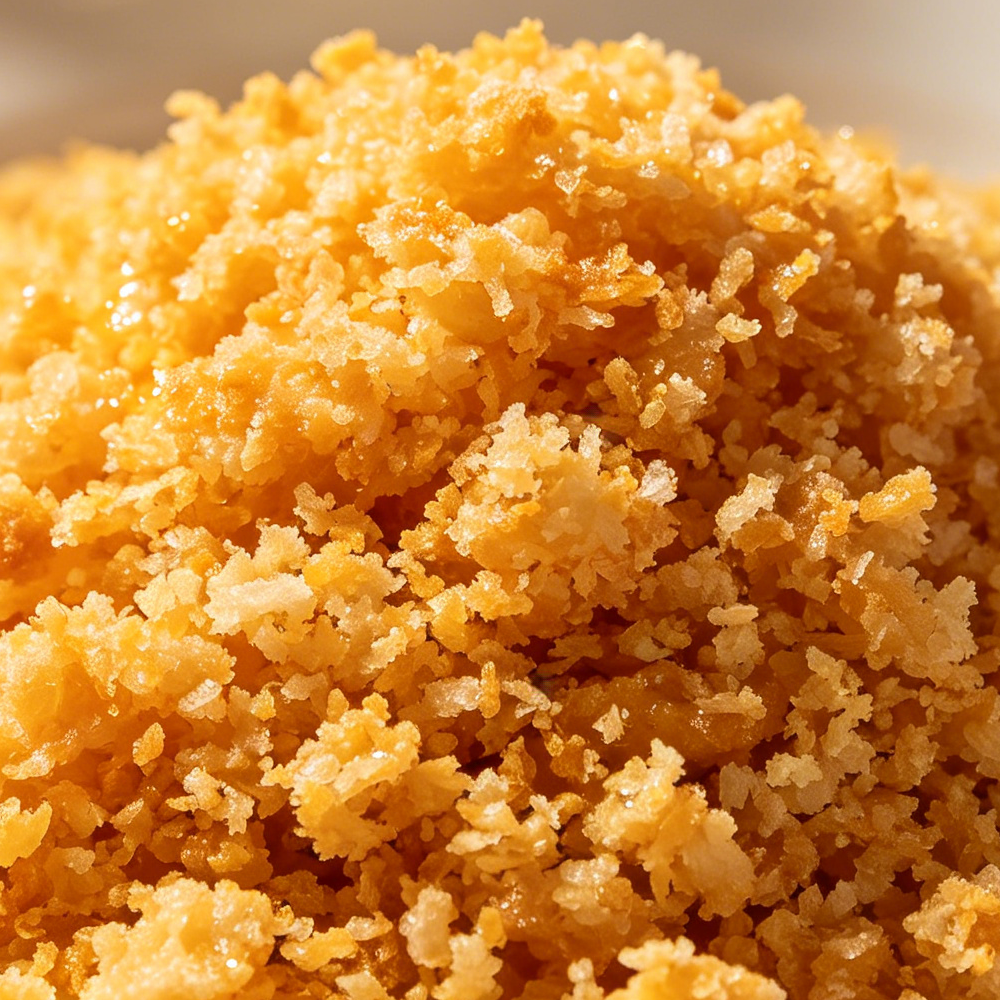
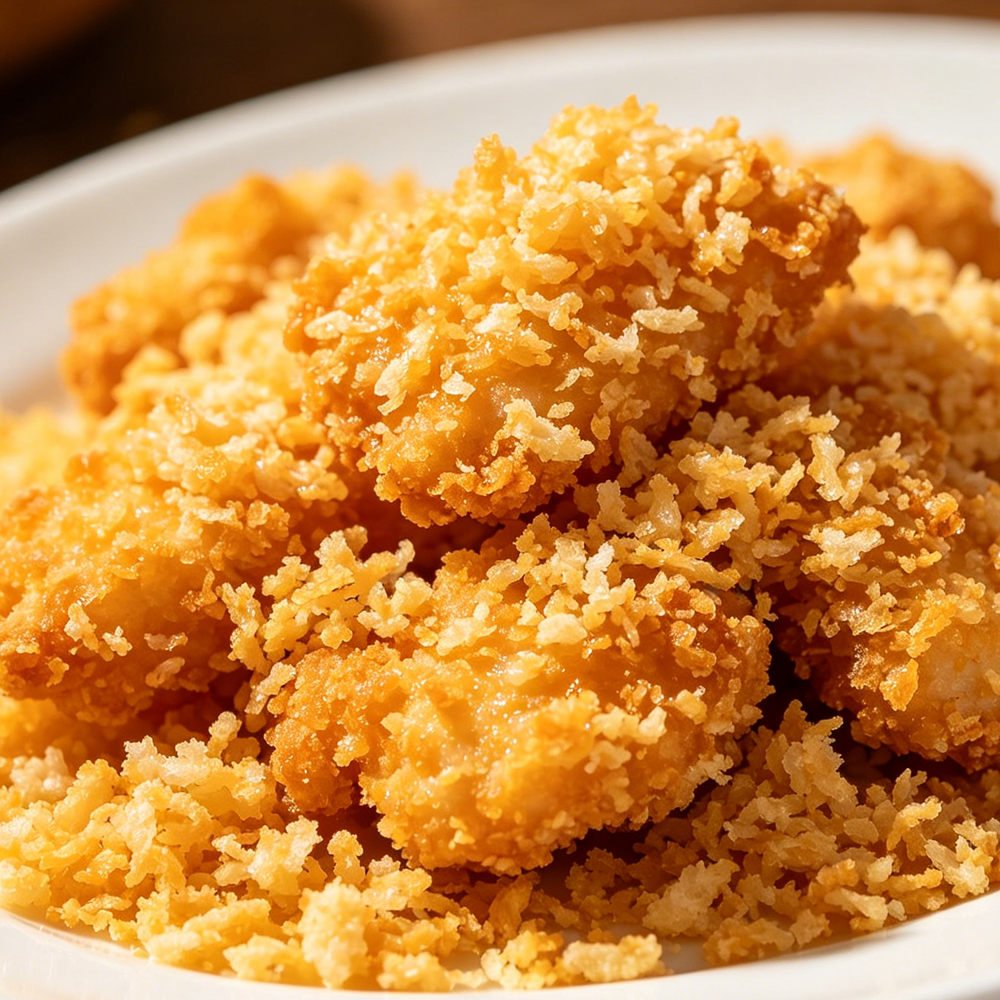
This essential cooling step firms up the internal starches, making the loaves perfectly prepped for secondary baking, industrial crushing, and final milling into premium crispy breadcrumbs.
4. Measurable Data: Traditional Methods VS Henghao Automation ROI
To illustrate the real financial benefits, here is a detailed performance comparison based on the live data collected during our factory trial:
-
Dough Weight Variation per Loaf
-
Traditional Semi-Manual Method: Plus or minus 30g to 50g (High variation)
-
Henghao Automated Production Line: Within plus or minus 2g (Secured by our digital cutting machine)
-
Measurable ROI Win: Achieved 100% uniform loaf specifications for even baking.
-
-
Internal Crumb Texture & Quality
-
Traditional Semi-Manual Method: Loose structure with large holes; easily collapses during milling.
-
Henghao Automated Production Line: Highly uniform, delicate honeycomb structure.
-
Measurable ROI Win: Reduced fine powder waste during milling, boosting the final breadcrumb yield by 8%.
-
-
Labor Cost in Forming Section
-
Traditional Semi-Manual Method: Requires 3 to 4 operators to sheet, roll, and cut by hand.
-
Henghao Automated Production Line: Requires only 1 operator to monitor the digital control screen.
-
Measurable ROI Win: Saved 75% of direct labor costs in the shaping section.
-
-
Comprehensive Production Efficiency
-
Traditional Semi-Manual Method: Limited by human fatigue; inconsistent output speed.
-
Henghao Automated Production Line: Continuous automated workflow with adjustable speeds.
-
Measurable ROI Win: Boosted overall daily manufacturing capacity by over 40%.
-
|
|
|
Contact Us to Request a Layout Diagram or Quote
In conclusion, this live material test proved to be a major success.
The client highly praised our technology, agreeing that Henghao manufactures some of the best industrial bread making machines for large bakeries available globally.
Therefore, if you are planning to set up a brand-new food factory, upgrade an aging commercial bakery bread production line, or looking for a reliable machinery vendor, Henghao provides the engineering skills your brand needs to scale up safely.
-
For Custom Quotes and Machine Specifications: Are you looking for a reliable supplier that matches international standards? Click here to contact our application engineers to get a free, customized fully automated bakery equipment solution and official quote.
-
Schedule a Raw Material Trial: We warmly welcome global food brands to visit our workshop. Just like this case study client, you can bring your own ingredients to run a live test on our machinery floor!
-
Company Name: Wuxi Henghao Machinery Technology Co., Ltd.
-
Phone/WhatsApp: +86 183 2613 2669
-
Email: Admin@wxhenghao.com
-
Official Website Platform: https://www.haopaiauto.com/


