
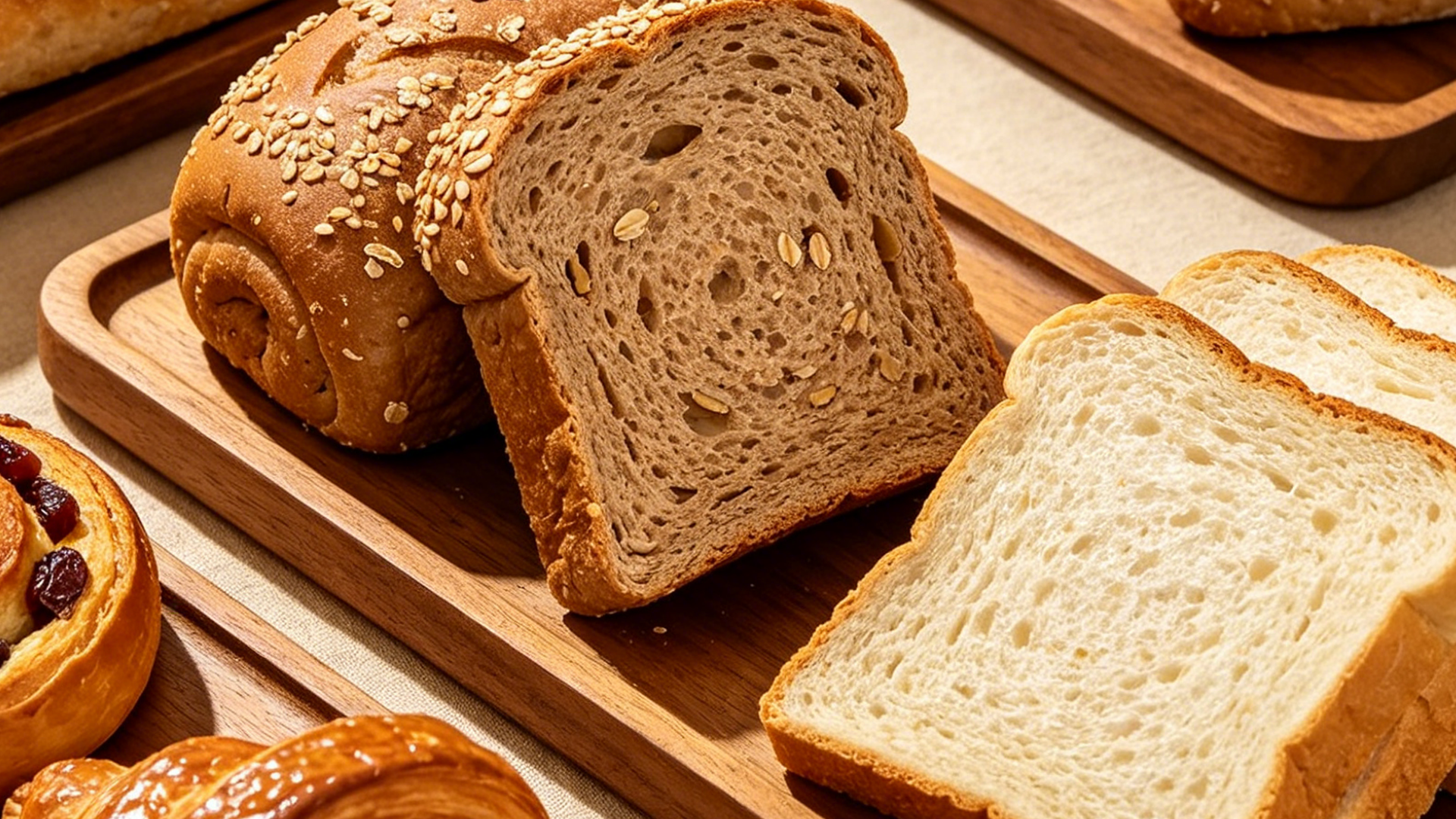
Commercial Bread Production Line in Modern Bakery Industry
A commercial bread production line is the backbone of large-scale bakery operations. It connects multiple machines into one smooth system that handles mixing, shaping, proofing, baking, cooling, and packaging.
In today’s fast-growing food industry, bakeries need to produce large quantities of bread while maintaining consistent quality. Therefore, a commercial bread production line helps improve efficiency, reduce labor, and ensure stable output.
Typically, a bread production line includes:
- Dough mixing system
- Dough dividing and rounding machines
- Dough shaping equipment
- Proofing system
- Baking ovens
- Cooling conveyors
- Packaging machines
Moreover, modern production lines are often automated. As a result, bakeries can run continuous production with minimal manual work.
Commercial Bread Maker for Small and Medium Bakeries
A commercial bread maker is designed for bakeries that need reliable production but may not require a full production line. It is ideal for small to medium-sized operations.
On one hand, small bakeries benefit from compact machines that are easy to operate. On the other hand, growing businesses use commercial bread makers to scale production gradually.
Key features of a commercial bread maker include:
- Automatic mixing and kneading
- Controlled fermentation process
- Consistent baking results
- Easy operation and maintenance
In addition, these machines help reduce manual labor and improve production efficiency.
Furthermore, they are suitable for bakeries that produce different types of bread in smaller batches.
Commercial Bread Machine for Efficient Daily Production
A commercial bread machine is widely used in bakeries that require stable daily output. It offers higher capacity and better performance compared to basic bread makers.
These machines are designed for continuous use and can handle larger volumes of dough.
Key advantages include:
- High production efficiency
- Stable and consistent baking quality
- Durable construction for long-term use
- Easy integration with other bakery equipment
Moreover, commercial bread machines can be combined with mixers and proofing systems to create semi-automated production setups.
As a result, bakeries can improve workflow efficiency without investing in a full industrial line.
Industrial Bread Machine for Large-Scale Production
An industrial bread machine is built for large bakeries and food factories. It is designed to handle high-volume production with continuous operation.
Compared with commercial machines, industrial bread machines offer:
- Much higher production capacity
- Advanced automation systems
- Strong and durable structure
- Precise temperature and timing control
In addition, industrial bread machines are often part of a fully automated production line. This includes mixing, shaping, baking, and packaging systems.
Therefore, large bakeries can produce thousands of bread units per hour with consistent quality.
Best Industrial Bread Making Machines for Large Bakeries
Choosing the best industrial bread making machines for large bakeries depends on production needs, product types, and automation levels.
High-quality machines usually offer the following features:
1. High Capacity and Efficiency
Machines must handle large volumes without reducing product quality.
2. Automation and Smart Control
Advanced control systems ensure stable production and reduce human error.
3. Energy Efficiency
Modern machines are designed to reduce power consumption while maintaining performance.
4. Durability and Hygiene
Food-grade stainless steel construction ensures long-term use and easy cleaning.
5. Flexible Production Options
Machines should support different types of bread, such as toast, buns, and artisan bread.
Moreover, many large bakeries prefer fully integrated systems. These systems connect all production stages into one continuous process.
As a result, production becomes more efficient and scalable.
Key Components of a Commercial Bread Production Line
A complete commercial bread production line consists of several important components working together.
1. Dough Mixing System
This system combines ingredients and develops the dough structure.
2. Dough Dividing and Rounding
Machines divide dough into equal portions and shape them into uniform pieces.
3. Dough Shaping Equipment
Shaping machines prepare dough for final proofing and baking.
4. Proofing System
Proofing chambers control temperature and humidity for proper fermentation.
5. Baking Ovens
Ovens bake the dough into finished bread products. Tunnel ovens are commonly used in industrial lines.
6. Cooling System
Cooling conveyors reduce product temperature before packaging.
7. Packaging System
Automated packaging ensures hygiene and extends shelf life.
In addition, these components can be customized based on specific production needs.
Advantages of Using a Commercial Bread Production Line
Using a commercial bread production line offers many benefits for bakeries.
Improved Efficiency
Automation reduces manual work and speeds up production.
Consistent Product Quality
Machines ensure uniform size, shape, and texture for every batch.
Reduced Labor Costs
Fewer workers are needed for large-scale production.
Scalable Production
Production capacity can be increased as demand grows.
Better Hygiene Standards
Automated systems reduce human contact with food products.
Moreover, these advantages help bakeries stay competitive in the market.
How to Choose the Right Bread Production Equipment
Selecting the right equipment for a commercial bread production line requires careful planning.
1. Production Capacity
Choose machines that match your output requirements.
2. Product Type
Different bread types require different processing systems.
3. Available Space
Ensure the production line fits your factory layout.
4. Budget Planning
Balance initial investment with long-term benefits.
5. Supplier Support


Wuxi Henghao Machinery Technology Co., Ltd.
Intelligent Manufacturing of Deliciousness, Always by Your Side.
From staple food machines to bakery and pastry production lines, we provide innovative equipment and customized automation to boost efficiency and quality.
Guided by "Constant Excellence," we aim to bring safe, delicious food to consumers while driving the intelligent transformation of the food industry.
Copyright © 2026 无锡恒好机械科技有限公司 Ltd. All Rights Reserved. POWERED BY WEIMOBTRADE
