Bakery Labor Shortage: How Bakery Automation Reduces Labor Dependence Without Sacrificing Product Quality
News Details

The bakery labor shortage is now a real problem for many food factories. It is harder to hire skilled workers. It is also harder to keep trained staff on the line. At the same time, buyers still want stable taste, clean shape, accurate weight, and on-time delivery.
Because of this, more bakeries are looking at automation. However, some managers still worry that machines may hurt product quality. They may ask: Will bread lose its handmade feel? Will cakes look less natural? Will dough be damaged by too much pressure?
The good news is that modern bakery automation is not just about speed. It is about control. With the right automated mixing and forming system, bakeries can reduce labor cost, improve output, and still keep product quality stable.
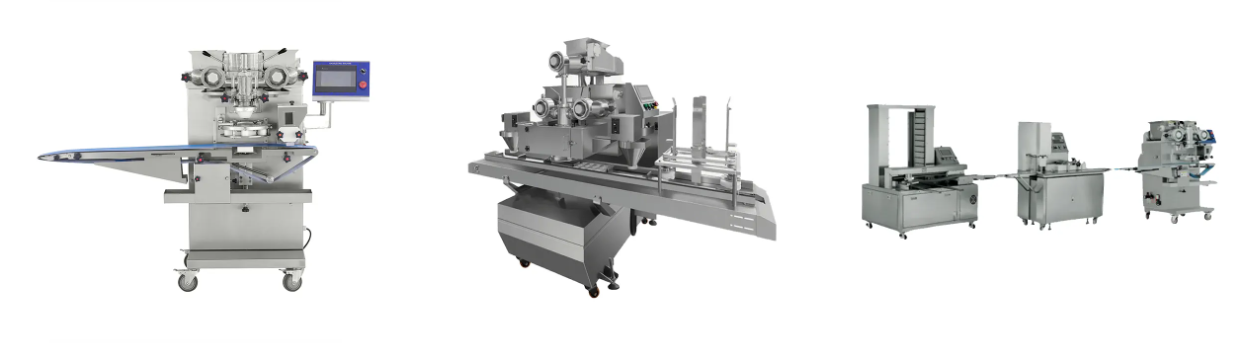
Haopai (Henghao Bakery) provides bakery and food automation equipment, including bread production lines, cake machines, cookie machines, pastry lines, dough processing equipment, and custom automation systems. These solutions are built to help factories raise efficiency while keeping repeatable quality.
Bakery Labor Shortage: Why Industrial Bakeries Need Automation Now
The bakery labor shortage affects daily production in many ways. First, manual work is tiring. Mixing, moving dough, shaping, filling, cutting, loading trays, and cleaning can take a lot of time and energy. As a result, workers may leave for easier jobs.
Second, skilled bakery workers need training. A good operator can judge dough feel, proofing time, weight, shape, and texture. However, when skilled staff leave, product quality may change. Then the factory must train new people again.
Third, demand can change quickly. One week, a customer may order more bread. The next week, another customer may need cakes or pastries. Without enough workers, it is hard to scale up or switch products fast.
Therefore, bakery automation helps reduce risk. It does not remove the need for people. Instead, it moves people away from repeated heavy tasks and lets them focus on checks, recipe control, cleaning, and management.
Automated Mixing and Forming: The First Step to Stable Bakery Quality
Automated mixing and forming are often the best places to start. These two steps have a strong effect on final product quality.
In manual mixing, dough quality may change from batch to batch. One worker may mix longer. Another may add water at a different speed. Also, dough temperature may rise if mixing is not controlled. These small changes can lead to big differences in bread volume, crumb, and texture.
Automated mixing helps make the process more stable. The machine can follow set time, speed, and order. Therefore, each batch is easier to repeat. In addition, operators can record process data and adjust settings based on real results.
Forming is also important. If dough is shaped too tightly, bread may lose volume. If it is too loose, the product may not hold shape. With automated forming, bakeries can control pressure, size, weight, and speed more precisely. As a result, the finished product looks more uniform.
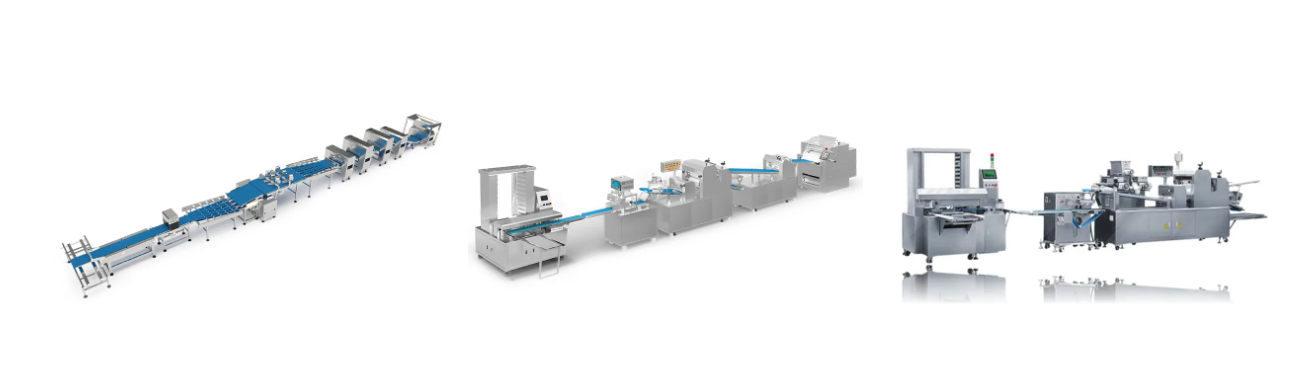
Haopai (Henghao Bakery) offers bread production line equipment with forming, conveying, filling, cutting, and dough processing functions. Its fully automated industrial bread production line includes PLC control and photoelectric sensing for precise, adjustable operation. This type of control is useful when factories need stable quality across long shifts.
Reduce Labor Cost Bakery Automation: Where Savings Come From
Many buyers search for “reduce labor cost bakery automation” because labor is one of the biggest costs in food production. However, the saving does not come from one place only. It comes from several areas.
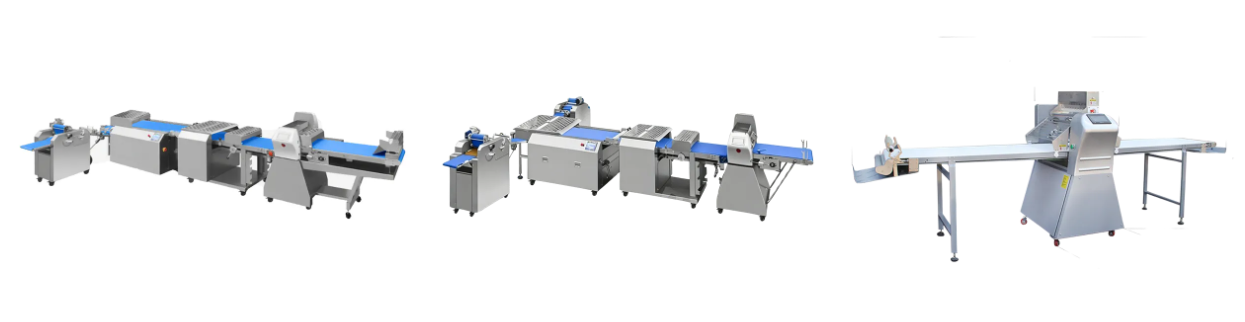
First, automation reduces repeated manual work. For example, one operator may be able to manage several machines instead of shaping each piece by hand. Haopai’s automatic pastry sheeter dough laminator notes that one operator can run multiple units, helping reduce labor cost.
Second, automation lowers waste. When weight and shape are more stable, there are fewer rejected products. Also, less dough is lost during cutting, forming, and transfer.
Third, automation improves output per shift. If a line runs at a steady speed, the factory can make more products with the same working hours.
Fourth, automation reduces training pressure. New workers can learn machine operation faster than complex hand forming. Meanwhile, skilled staff can focus on quality checks and line settings.
So, automation is not only a labor-saving tool. It is also a way to make production more predictable.
Bakery Labor Shortage and Product Quality: Why Machines Can Improve Consistency
Some bakery owners worry that machines will make products look too “industrial.” However, in many cases, the right equipment can improve product quality.
For example, cake batter needs even mixing and accurate depositing. If batter weight varies, cake size and baking results may vary too. Haopai’s professional automatic cake depositor is designed for different cake molds and drip-free batter deposition with high precision. This helps improve standardization and line efficiency.
Cookies also need stable shape and size. Haopai’s automatic butter cookie depositor uses servo precision control and a modular mold system. This supports consistent extrusion and fast design changeover.
For bread, stable dough pressing and forming are key. Haopai’s high-capacity turnkey bread production line uses a three-stage dough pressing process. It is designed to preserve dough texture while supporting precise sizing and low weight variation.
Therefore, quality does not have to fall when automation rises. In fact, when the line is well matched to the product, quality can become more stable.
Automated Mixing and Forming for Bread, Cake, Pastry, and Cookies
Different bakery products need different automation plans.
For bread, the key steps are mixing, dividing, resting, forming, proofing, baking, cooling, and packing. Automated forming helps keep bread weight, shape, and texture steady. It is especially helpful for toast, buns, filled bread, layered bread, and soft bread.
For cake, batter mixing and depositing are critical. The batter must stay even and airy. Also, the deposit amount must be accurate. Automated cake depositors and cutting machines help create standard sizes and clean portions.
For pastry, dough sheeting and laminating are very important. If dough thickness changes, the final layers will also change. Haopai’s pastry sheeter and dough laminator can automate dough sheeting, rolling, and withdrawing. PLC-controlled sheeting helps keep thickness stable.
For cookies, mold control and extrusion pressure matter. A servo-controlled cookie depositor can keep shape and weight more consistent while supporting fast product changes.
In short, bakery automation should be chosen based on the product, not only based on speed.
Reduce Labor Cost Bakery Automation Without Losing Craft Quality
Automation works best when it protects the craft, not when it ignores it. Bread still needs the right dough feel. Cakes still need the right batter texture. Pastry still needs careful layering. Cookies still need clean shape and good bite.
Therefore, bakeries should not simply buy the fastest machine. Instead, they should study the process first. What makes the product special? Is it soft crumb, thin layers, rich filling, open texture, or handmade shape? After that, the machine should be set to protect that feature.
For example, soft bread may need gentle dough pressing. Croissants may need accurate cutting and rolling. Cakes may need precise batter depositing. Cookies may need a mold system that keeps product design clear.
Haopai (Henghao Bakery) focuses on food automation and custom solutions. According to its company information, Henghao provides intelligent equipment and customized non-standard automation systems to meet process and capacity needs. This is useful for factories that want automation but still need a product-specific solution.
Bakery Labor Shortage: How Line Design Reduces Manual Work
A machine alone may not solve the bakery labor shortage. Line design also matters.
For example, if workers still need to carry dough between machines, labor use remains high. If trays must be moved by hand, the team still needs many people. If cleaning access is poor, changeover takes longer and more labor is needed.
A better line design connects key steps. Conveyors, dividers, formers, fillers, cutters, sheeters, proofing systems, ovens, cooling lines, and packing units should work together as much as possible. This reduces manual transfer and makes the line easier to control.
Also, the layout should fit the factory floor. Some plants need straight lines. Others need L-shaped or U-shaped layouts. In addition, operators need enough space to check products, change molds, clean parts, and adjust settings.
Haopai offers one-stop food processing solutions and a wide product range for bread, pastry, cake, cookie, and other food production needs.
Automated Mixing and Forming: Data and Controls Help Operators Work Better
Automation does not remove operators. Instead, it changes their role.
In a manual bakery, workers often rely on hand feel and habit. This can work well, but it is hard to scale. In an automated bakery, operators use settings, data, and quality checks. They watch dough temperature, machine speed, product weight, shape, filling amount, and surface quality.
PLC control, sensors, servo systems, and touch screens make this easier. Operators can adjust settings and keep the process repeatable. Moreover, recipe memory can help reduce mistakes during product changes.
This is especially useful for multi-SKU bakeries. When a factory makes several products in one day, manual setup can cause errors. With automated settings, changeover becomes easier and more stable.
As a result, workers do less heavy labor and more skilled control work. This can also make bakery jobs more attractive and easier to train.
Reduce Labor Cost Bakery Automation: Common Mistakes to Avoid
Although automation can reduce labor cost, bakeries should avoid several mistakes.
First, do not automate a poor process too quickly. If the recipe or workflow is unstable, automation may repeat the same problem faster. Therefore, bakeries should test and improve the process first.
Second, do not focus only on machine speed. A very fast line is not helpful if it creates waste, damages dough, or requires long cleaning time.
Third, do not ignore training. Operators still need to know how the equipment works, how to spot product issues, and how to clean the line safely.
Fourth, do not forget maintenance. Preventive maintenance helps avoid sudden downtime. Spare parts and after-sales support are also important.
Haopai states that it provides after-sales support, technical service, and customized solutions. This matters because industrial bakery equipment should be supported through installation, training, production startup, and later process changes.
Bakery Labor Shortage FAQ for Industrial Bakery Buyers
How does bakery automation help with labor shortage?
It reduces repeated manual work such as mixing, forming, cutting, depositing, and transfer. Therefore, fewer workers are needed for heavy tasks, and staff can focus on quality control.
Will automated mixing and forming reduce product quality?
Not if the line is designed well. In many cases, automation improves quality because it keeps time, speed, pressure, weight, and shape more stable.
How can bakeries reduce labor cost with automation?
They can reduce manual handling, lower waste, improve output per shift, shorten training time, and improve line stability.
What Haopai equipment can support bakery automation?
Haopai offers bread production lines, pastry sheeters, dough laminators, cake depositors, cake cutting machines, cookie depositors, croissant production lines, and customized food automation systems.
Conclusion: Bakery Automation Solves Labor Shortage While Protecting Quality
The bakery labor shortage will likely remain a challenge for many factories. However, bakeries do not have to choose between lower labor use and better product quality. With the right automation plan, they can have both.
Automated mixing and forming help keep dough and batter more stable. Smart controls help reduce errors. Better line design cuts manual handling. Meanwhile, high-quality bakery equipment can support stable weight, shape, texture, and output.
For B2B bakeries, the goal is not to replace craft with machines. The goal is to turn craft knowledge into a repeatable process. That is how bakeries can reduce labor cost with bakery automation while still making products customers trust.
Haopai (Henghao Bakery) provides industrial bakery equipment and custom automation solutions for bread, cake, pastry, cookies, and more. Explore available solutions here: Haopai (Henghao Bakery) All Products.