Bakery Automation ROI: Cost, Yield and Payback Guide
News Details
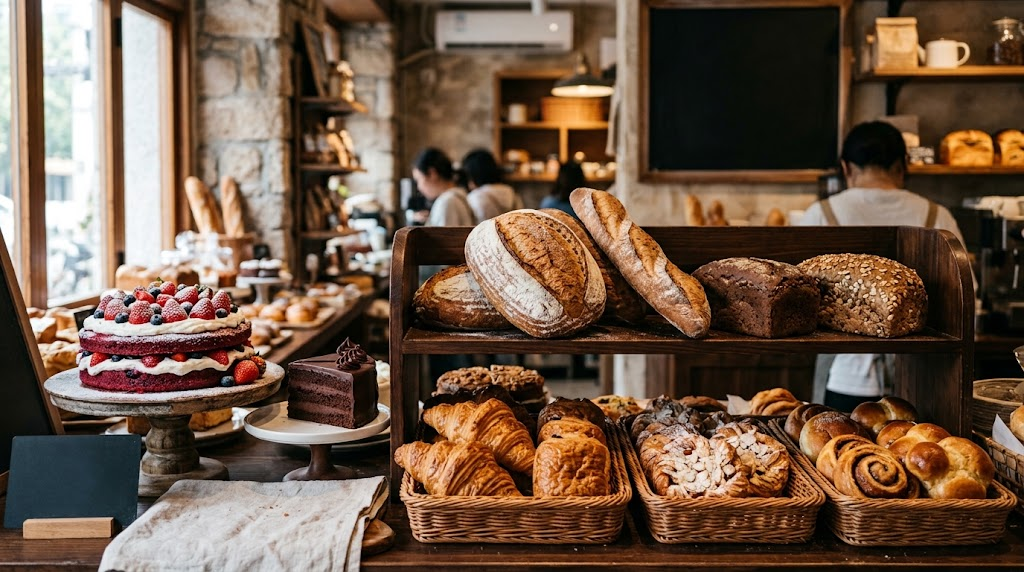
For a commercial bakery, automation is a major investment. Before buying new equipment, owners and production managers need to know one thing: Will the machine pay for itself?
This is where bakery automation ROI matters.
A good automation system can do more than save labor. It can improve product yield, reduce waste, shorten changeover time, and increase output. These benefits can improve profit and shorten the bakery equipment payback period.
This guide explains how to measure the real value of bakery automation and what B2B buyers should check before making an investment.
What Is Bakery Automation ROI?
Bakery automation ROI shows how much financial value an automated system can create compared with its total cost.
A simple formula is:
ROI = (Annual Benefit − Annual Operating Cost) ÷ Initial Investment × 100%
The annual benefit can come from several areas:
-
Lower labor costs
-
Less product waste
-
Better ingredient yield
-
Higher production output
-
Faster product changeovers
-
Lower overtime costs
-
Fewer quality problems
So, buyers should not judge a machine only by its purchase price.
A more expensive machine may deliver better ROI if it saves more labor, reduces waste, or increases production capacity.
How to Reduce Labor Cost with Bakery Automation
Labor is often one of the largest costs in bakery production.
Many bakery processes still require workers to divide dough, shape products, sheet pastry, fill products, deposit batter, or move products between machines. As production grows, labor costs can rise quickly.
This is why many manufacturers want to reduce labor cost with bakery automation.
Automation can take over repetitive tasks and help one operator manage more production equipment.
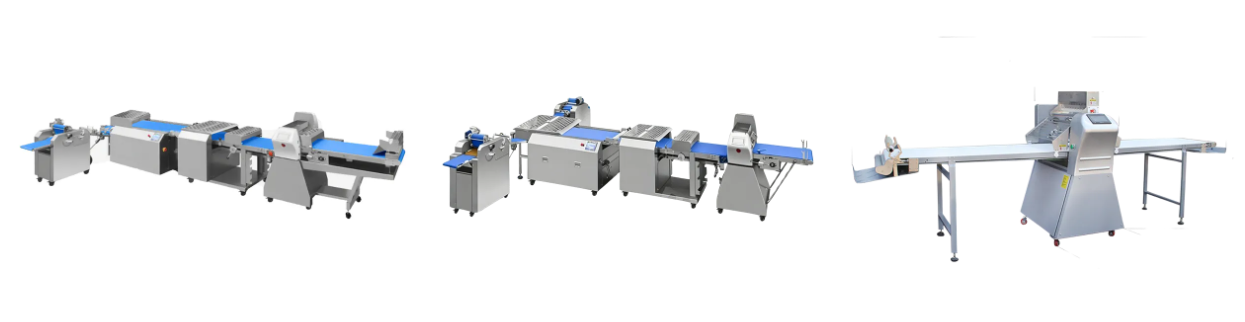
For example, Henghao's automatic pastry sheeter automates dough sheeting, rolling, and withdrawing. The company states that one operator can run multiple units. PLC control also helps maintain stable dough thickness.
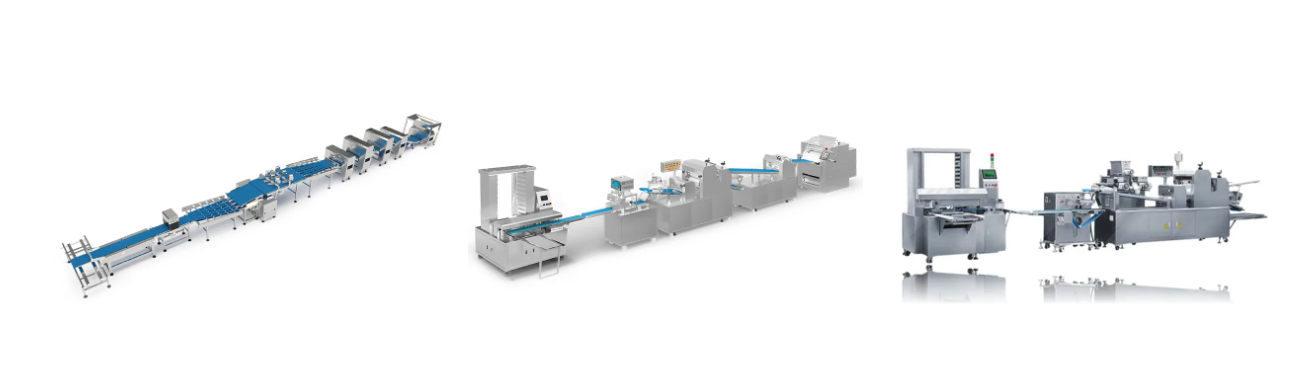
Its industrial bread production line also combines several production stages. The system uses PLC control and photoelectric sensing, with forming, slitting, conveying, filling, and cutting functions available in the line.
The goal is not simply to replace workers. Instead, automation allows workers to spend more time on quality checks, machine control, packing, and other higher-value tasks.
How to Calculate Bakery Equipment Payback
Bakery equipment payback measures how long an investment takes to recover its cost.
A simple formula is:
Payback Period = Initial Investment ÷ Annual Net Benefit
For example, suppose a bakery invests $400,000 in an automated production system.
The system creates:
-
$100,000 in annual labor savings
-
$30,000 in waste savings
-
$70,000 in additional production value
-
$40,000 in new operating costs
The annual net benefit is:
$100,000 + $30,000 + $70,000 − $40,000 = $160,000
The estimated payback is:
$400,000 ÷ $160,000 = 2.5 years
This is only a sample calculation. Actual results depend on labor rates, production volume, equipment use, maintenance, energy costs, and product demand.
For this reason, B2B buyers should calculate ROI with their own production data.
Yield Has a Direct Impact on Bakery Automation ROI
Labor is only part of the ROI equation.
Yield also matters.
Small differences in dough weight, filling weight, or batter volume can create large losses at high production volumes.
For example, if a bakery uses 3 g more dough for every product and makes 100,000 products, it uses:
3 g × 100,000 = 300 kg
of additional dough.
That is why accurate portioning and forming can improve bakery profitability.
Henghao offers equipment designed for controlled production. Its cake depositor supports precise batter deposition across different molds. Its burger dough bun production line can divide fermented dough into preset weights from 30 g to 2,000 g, with a stated tolerance of ±1%.
Better weight control can help bakeries:
-
Reduce overfilling
-
Lower ingredient waste
-
Improve product consistency
-
Reduce rework
-
Keep product weight stable
As a result, yield improvement can become an important part of bakery automation ROI.
Changeover Time Can Improve Bakery Equipment Payback
Many commercial bakeries produce several SKUs each day.
A production line may switch between different:
-
Product sizes
-
Shapes
-
Fillings
-
Dough types
-
Molds
-
Cutting patterns
Each change takes time.
If a bakery spends 40 minutes on one changeover and performs four changeovers per day, that means more than 2.5 hours of lost production time.
Faster changeovers can recover part of that capacity.
Henghao's croissant production lines support different product shapes and quick cutter changes. Its cookie depositor also uses a modular mold system for faster product changes.
For bakeries with many SKUs, this flexibility can have a strong effect on ROI.
The key question is not only:
"How fast can the machine run?"
It is also:
"How much production time can the machine save?"
Production Capacity Is Part of Bakery Automation ROI
Automation can also increase usable production capacity.
Suppose a bakery already has enough workers but its production line is running near full capacity. Adding automation may allow the company to produce more without adding the same number of workers or expanding the factory.
Henghao offers both high-capacity bread production lines and smaller production systems. Its turnkey bread line is designed for small to medium-sized bakeries, food processors, and restaurant chains. Its larger industrial bread line supports adjustable speed, product size, and weight.
Higher capacity can help a bakery:
-
Accept larger orders
-
Add new customers
-
Support private-label production
-
Handle seasonal demand
-
Launch new products
-
Increase factory utilization
Therefore, the value of automation should include both cost savings and additional production capacity.
Henghao Bakery Automation Equipment
Henghao Machinery provides food processing equipment and customized automation solutions. Its bakery equipment portfolio includes bread production lines, Danish pastry production lines, cake and cookie machines, cake aeration systems, encrusting machines, and auxiliary equipment.
Some key solutions include:
Bread Production Lines
Henghao's automated bread lines combine several production steps in one system. Depending on the model, the equipment can include forming, slitting, conveying, filling, and cutting functions.
This type of automation can help reduce manual handling and improve production consistency.
Croissant and Pastry Lines
Croissant and Danish pastry production requires stable dough processing and accurate shaping.
Henghao's croissant systems support different product shapes and quick cutter changes. Its pastry sheeter also automates dough sheeting and rolling while helping maintain consistent thickness.
These features can help bakeries improve output while reducing repetitive manual work.
Cake and Cookie Machines
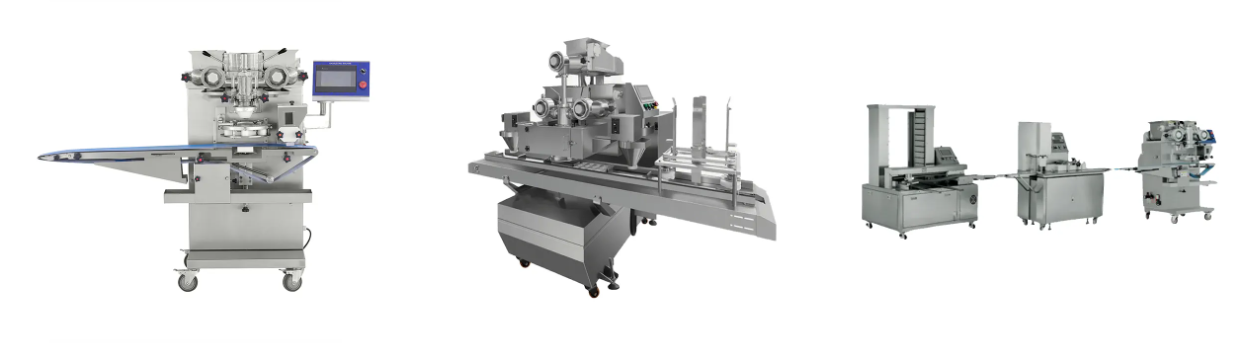
Henghao also offers cake depositors, cake cutting machines, cookie depositors, and cake aeration systems.
Its cookie depositor uses servo precision control and a modular mold system. Its cake depositor supports different cake molds and batter types.
These systems can support stable production for medium- and high-volume bakeries.
Customized Bakery Automation
Not every bakery needs a complete production line.
Some factories may only need to automate one bottleneck, such as dough sheeting, filling, depositing, cutting, or forming.
Henghao provides customized non-standard automation based on customer processes and capacity needs. This approach allows manufacturers to target their biggest production problem first.
Learn more about Henghao Bakery and its automation capabilities.
You can also view the complete Henghao Bakery product range to compare available equipment.
How to Measure Bakery Automation ROI Before Buying
Before buying equipment, collect real production data.
Start with these seven numbers:
1. Labor cost
Calculate wages, overtime, benefits, and training costs.
2. Production output
Measure actual products per hour instead of using only the machine's rated capacity.
3. Product yield
Track dough loss, filling loss, rejected products, and weight variation.
4. Changeover time
Record cleaning, mold changes, cutter changes, and machine adjustments.
5. Equipment use
Check how many hours the equipment will run each day.
6. Maintenance cost
Include spare parts, service, and planned maintenance.
7. Additional sales
Estimate how much extra production the market can actually absorb.
These figures give buyers a clearer picture of the expected bakery equipment payback.
What Should B2B Buyers Look for?
The cheapest machine is not always the best investment.
Instead, compare equipment based on the total production result.
Ask these questions before buying:
-
How much labor can the system save?
-
Can it reduce product waste?
-
How stable is product weight?
-
How fast can operators change products?
-
Can it increase production capacity?
-
Can it work with existing equipment?
-
Is the system easy to clean and maintain?
-
Can the supplier customize the equipment?
-
What after-sales support is available?
Henghao states that it provides customized services, overseas after-sales support, and a one-year machinery warranty with technical support.
These factors should also be included when comparing suppliers.
Final Guide to Bakery Automation ROI
A strong bakery automation ROI calculation should look beyond labor savings.
The main factors are:
Labor + Yield + Changeover + Capacity − Operating Cost
Automation can help bakeries reduce repetitive work, control product weight, lower waste, shorten changeovers, and increase output.
At the same time, the right equipment should match the bakery's products, production volume, and future growth plans.
Henghao Bakery provides automated equipment and customized food processing solutions for bread, pastry, cake, cookies, and other food products.
For B2B buyers, the best approach is simple:


