What Equipment Is Commonly Used in the Bakery Industry?
News Details
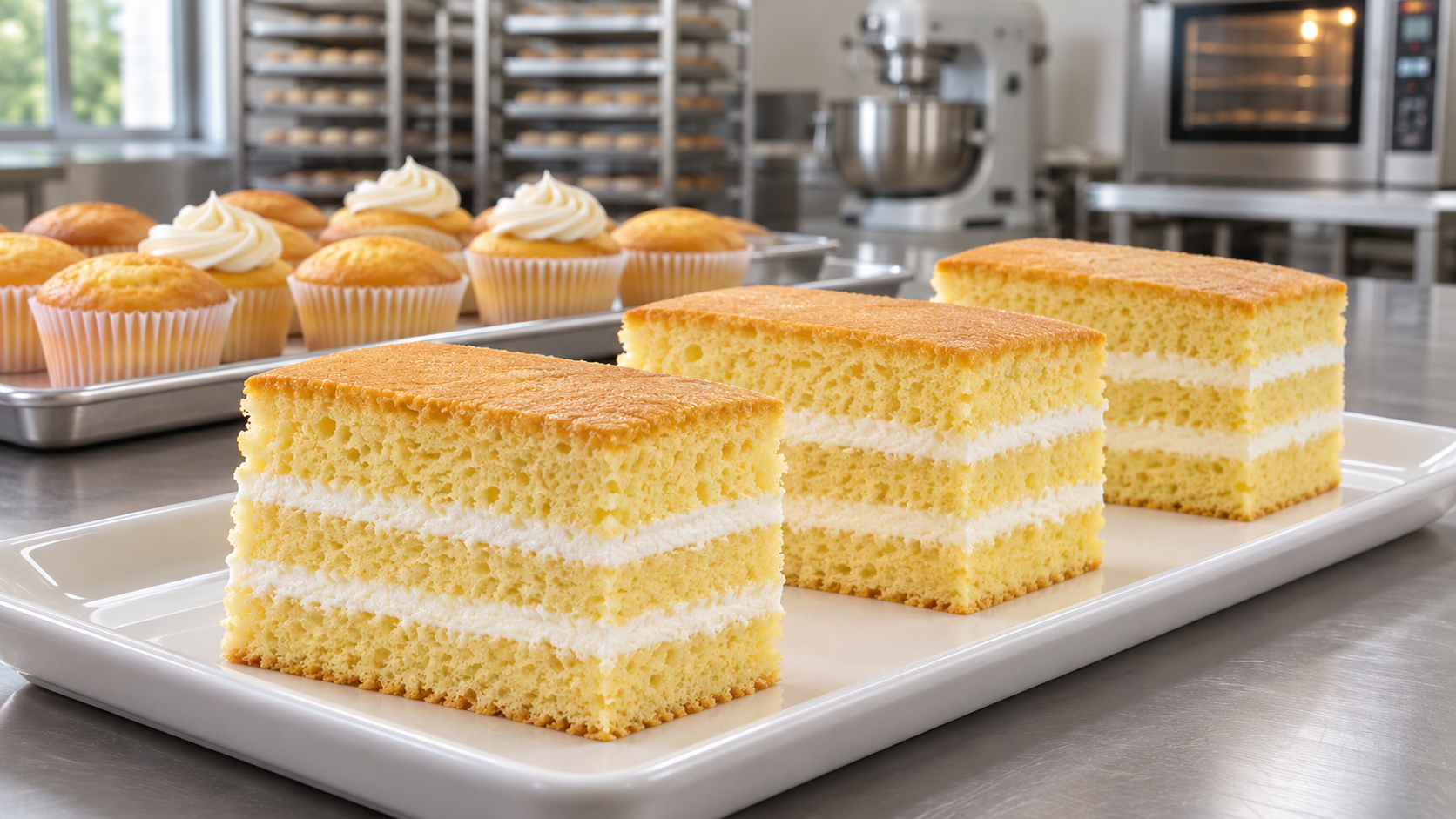
Commonly used equipment in the bakery industry includes mixers, dough dividers, rounders, molders, sheeters, proofers, ovens, depositors, cooling systems, cutters, and packaging machines. However, the specific combination of these tools varies from bakery to bakery.
A bread factory must develop dough and control fermentation. A cake factory requires stable batter and precise dispensing. Meanwhile, a pastry manufacturer must protect thin dough and fat layers.
For B2B buyers, the goal is to link each machine to a specific production need. This guide explains common equipment, how it works, and how Haopai's Henghao Bakery Machinery product line can support various products.
Common bakery equipment and its function
Most bakery production lines follow a similar process: measuring, mixing, forming, baking, cooling, and packaging. Fermented products also require time for yeast activity. Filled or decorated products require additional steps.
| Equipment | Main Function | Common Application |
| Weighing scales and ingredient dispensing systems | Measure recipe ingredients | Bread, cakes, cookies |
| Mixing Machine | Blend ingredients, develop dough, or whip mixtures | Most bakery products |
| Dividers and rounding machines | Portion dough and round pieces | Buns and rolls |
| Forming machine | Shape dough before fermentation | Loaves and rolls |
| Sheeter and laminator | Reduce thickness and create layers | Croissant and puff pastry |
| Filling Machine and Coating Machine | Portion batter or wrap fillings with dough | Cakes, cookies, filled pastries |
| Proofer and retarder | Control fermentation conditions and schedule | Yeast-leavened dough |
| Oven | Bake the product to achieve the desired texture and color | Bread, pastries, cakes |
| Cooling rack or conveyor | Remove heat before further processing | Most baked goods |
| Cutting and Packaging Machines | Portion and protect finished product | Sliced cakes, bread, snack packs |
Supporting items are also important. Trays, racks, worktables, refrigeration, and cleaning equipment help the main machine function as a practical system.
Therefore, compare the entire process before selecting individual machines. One fast machine cannot overcome a bottleneck elsewhere in the production line.
How to Choose a Mixer for Bakery Industry Applications

Choosing a mixer for bakery industry use starts with the material being mixed.
Spiral mixers mainly serve dough production. A spiral tool works with a rotating bowl to knead the mixture. This design suits many bread and pizza doughs.
Planetary mixers offer more flexibility. Different tools handle tasks such as whipping cream, blending batter, and mixing suitable dough batches. Consequently, they are useful where one kitchen makes several product types.
Haopai lists planetary mixers with 20, 40, 60, and 80-liter bowls, plus interchangeable beaters, hooks, and whisks. These options give buyers a starting point for matching tools to recipes.
However, bowl volume is not the same as usable dough capacity. A stiff dough can place a different load on a mixer than a light batter.
Ask for the approved batch range for your formula. Also, compare mixing time, final temperature, unloading, and cleaning access. Test both the smallest normal batch and the largest planned batch before confirming the model.
Forming Equipment for the Bakery Products Market
Once mixing is complete, forming equipment controls weight, shape, and presentation.
Dividers portion dough, while rounders prepare pieces for later shaping. Moulders then create forms such as loaves or rolls. Consistent portion weight helps control ingredient cost and baking variation.
Sheeters reduce dough thickness through rollers. Laminators combine rolling and folding to create alternating dough and fat layers. During baking, these layers help produce the flaky structure found in many pastries.
Haopai's range includes bread production lines, pastry sheeters, and croissant forming lines. Buyers can review these options against their required shapes and output.
For filled goods, encrusting machines place filling inside an outer dough layer. Haopai also lists a multi-function encrusting machine with dual filling metering.
However, soft fillings, sticky dough, and large inclusions can change machine behavior. Therefore, run samples with the real recipe and check sealing, shape retention, and filling distribution after baking.
Cake and Cookie Bakery Industry Equipment
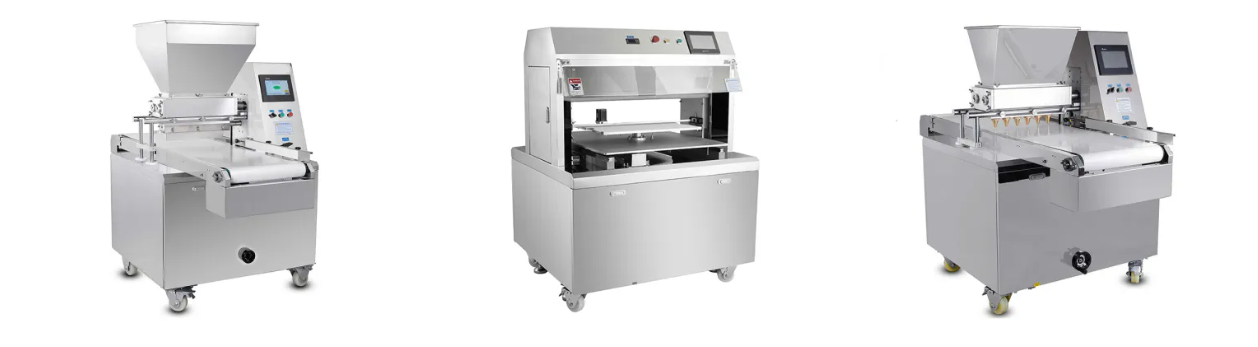
Cake and cookie lines need a different approach because their mixtures behave differently from bread dough.
Cake aeration systems incorporate air into suitable mixtures. The resulting gas cells help influence baked volume and crumb. Depositors then meter batter into pans or molds.
Cookie depositors portion or shape compatible dough through selected outlets. However, dough stiffness and inclusion size affect which forming method works best.
Haopai offers cake aeration systems, cake depositors, and butter cookie depositors. Its catalog also includes mechanical and ultrasonic cake cutters.
For buyers, the key question is whether the equipment preserves the intended texture. Check batter density before and after transfer, deposit weight across the tray, and the appearance of cooled samples.
For cutting trials, use the actual cake temperature and filling. A clean cut in a firm test block does not prove the same result in a soft cream cake.
Proofing, Baking, and Packing Bakery Industry Equipment
Proofers control the environment around yeast-raised dough. Retarders use refrigeration to slow fermentation and help manage production schedules.
Ovens then supply heat to expand gases, set structure, and develop color. Common choices include deck, convection, rack, and tunnel ovens. Selection depends on the product, batch size, available energy, and required workflow.
After baking, cooling becomes a key capacity issue. If products arrive faster than the cooling area can handle, upstream speed brings little value.
Packing must also match the product condition. Warm goods can create condensation inside a package, while fragile products need suitable handling.
Haopai's published range includes rotary ovens and horizontal flow packing equipment. When planning these stages, agree on product size, temperature at packing, film requirements, and expected output.
Confirm which machines, conveyors, and controls are included in the supplier's quotation.
What Are 20 Different Types of Bakery Products?
The bakery products market covers far more than bread and celebration cakes. The following 20 examples show why equipment requirements vary.
| No. | Bakery product | Important process or equipment |
| 1 | Sandwich bread | Moulding, proofing, pan baking |
| 2 | Baguettes | Dough shaping and suitable oven steam |
| 3 | Sourdough loaves | Fermentation control and gentle handling |
| 4 | Burger buns | Dividing, rounding, proofing |
| 5 | Dinner rolls | Portioning and shaping |
| 6 | Bagels | Forming, boiling or steaming, baking |
| 7 | Focaccia | Gentle handling and tray preparation |
| 8 | Croissants | Lamination, cutting, rolling, proofing |
| 9 | Danish pastries | Lamination, shaping, filling |
| 10 | Puff pastry turnovers | Sheeting, filling, sealing |
| 11 | Sponge cakes | Whipping or aeration and depositing |
| 12 | Chiffon cakes | Foam preparation and controlled mixing |
| 13 | Cupcakes | Batter depositing |
| 14 | Muffins | Mixing and portioning with inclusions |
| 15 | Brownies | Batter spreading and cutting |
| 16 | Butter cookies | Depositing or forming |
| 17 | Shortbread | Mixing, sheeting, or moulding |
| 18 | Crackers | Sheeting, docking, cutting |
| 19 | Egg tarts | Shell forming and custard depositing |
| 20 | Mooncakes | Filling, encrusting, moulding |
These are common process examples, not claims that one machine handles every product. Recipes and factory methods determine the final equipment combination.
What Are the Trends in the Bakery Industry?
Puratos' Taste Tomorrow research identifies protein-rich products, contrasting textures, and sourdough as key bakery themes for 2026.
For equipment buyers, these trends have practical effects.
Protein-rich recipes require fresh trials. Added protein can change water needs, dough behavior, and texture. A line proven with standard white bread should be tested again with the new formula.
Mixed textures require careful handling. Crisp shells, soft centers, and creamy fillings create different demands for forming, dosing, cutting, and packing.
Sourdough puts attention on fermentation. Production planning must allow for culture management, time, temperature, and dough variation.
These trends also make changeover more important. Buyers serving several product categories should compare tool swaps, cleaning time, and recipe adjustments alongside maximum speed.
A flexible line can support new launches, but flexibility must be demonstrated with the intended products.
Global Bakery Market Size: What Should Buyers Take from It?
Grand View Research values the global bakery products market at USD 548.7 billion in 2025. It estimates USD 578.1 billion for 2026 and forecasts USD 841.8 billion by 2033, with a projected annual growth rate of 5.5% from 2026 to 2033.
These figures describe product sales, not bakery machinery sales. They are also one publisher's estimates; market definitions and methods differ.
Therefore, global bakery market size should provide context for investment, rather than determine machine capacity.
Base capacity on local demand, confirmed orders, shift hours, product mix, and realistic downtime. Then check whether proofing, baking, cooling, and packing can support the same output.
Planning Bakery Industry Equipment with Haopai
Before requesting a proposal, prepare product samples, recipes, target weights, hourly output, factory drawings, and utility details.
Next, ask suppliers to demonstrate the full process with agreed acceptance criteria. Compare product quality, waste, labor needs, cleaning, spare parts, and service support.
Explore Haopai's complete bakery equipment range to identify suitable production stages. You can also learn more about Haopai and Henghao Bakery Machinery, including its customized food automation work.
A clear product brief gives the technical team a stronger basis for proposing equipment that fits your bakery's daily work and future plans.


