Bread Line RFQ: Capacity, Layout and Dough Data
News Details
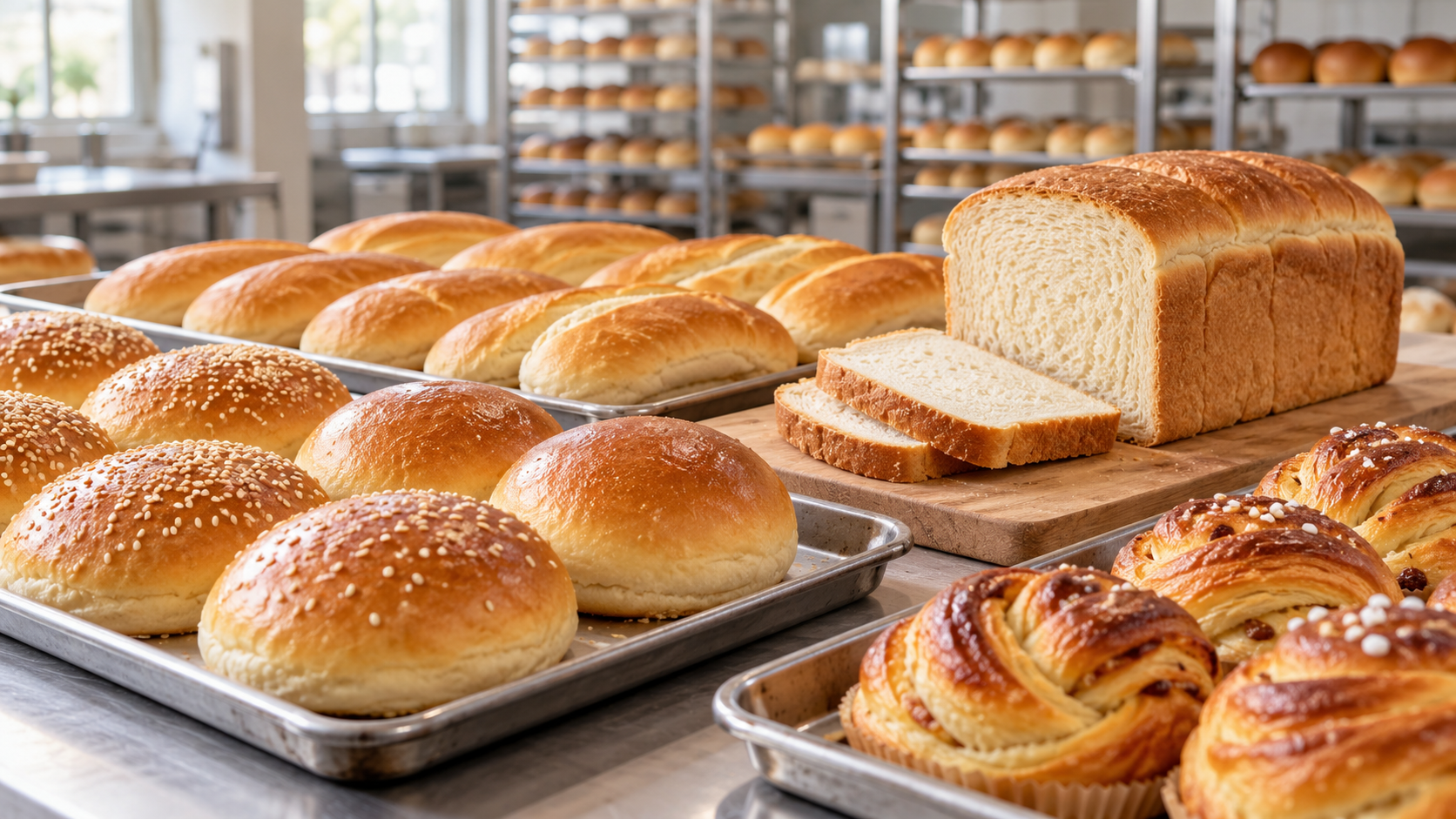
The procurement of a bread production line begins long before comparing prices. First, the supplier needs to understand what you are manufacturing, your required output, and where the equipment will be installed.
An RFQ, or Request for Quotation, consolidates these details. A well-defined industrial bread production line RFQ enables suppliers to propose suitable equipment, define the supply scope, and clarify what is included in their pricing.
However, a request that only states "please send your best price" leaves too many unresolved questions. Two suppliers may quote vastly different systems, making a fair comparison impossible.
This guide explains how to prepare the capacity, layout, and dough data necessary for a useful bread production line quotation.
Define the Product in Your Industrial Bread Production Line RFQ
Start with the bread itself. A production line for round hamburger buns may require different forming steps than a line for layered or filled bread.
Therefore, provide a concise product list including:
-
Product names and clear photographs.
-
Target dimensions and shape.
-
Dough piece weight before baking.
-
Finished weight after baking.
-
Type of filling and filling weight, if applicable.
-
Tray size and product spacing.
-
Current products and planned future additions.
Clearly distinguish between dough weight and finished bread weight. Baking removes moisture, so these figures are not identical.
Additionally, identify your primary product. If one type of bread constitutes the majority of your orders, the supplier should initially assess the line based on that product. Other items can then be evaluated for tooling requirements, changeover time, and output limitations.
Set Bread Production Line Capacity Based on Marketable Output
Bread production line capacity should reflect the output your business requires, not merely the maximum speed listed in a brochure.
There are three key figures to discuss:
-
Rated output: The stated output under defined operating conditions.
-
Running output: The actual rate achieved while processing your product.
-
Marketable output: The number of acceptable products available after accounting for losses and rejects.
For example, assume you need 24,000 acceptable pieces per shift. After scheduled cleaning and product changeovers, you anticipate six production hours. If your assumed acceptance rate is 95%, the required average forming output is:
24,000 ÷ 6 ÷ 0.95 ≈ 4,211 pieces per hour
This is a planning example and not a claim of machine performance. Additional allowances may be necessary for short stoppages and speed adjustments.
Furthermore, disclose the number of shifts, product mix, and potential growth. Ask the supplier to confirm the capacity for each primary product, including its weight, shape, and recipe.
Finally, evaluate the entire process. A high-speed forming line cannot achieve its full output if the prover, oven, cooling area, or packaging station cannot keep pace.
Share the Bakery Line Layout Including Work Space
A practical bakery line layout should show more than just an empty rectangle with room dimensions.
Provide a scaled drawing that includes:
-
Building length, width, and clear height.
-
Columns, walls, doors, and delivery access.
-
Existing equipment and transfer points.
-
Raw material entry and finished product exit.
-
Power, water, drainage, and compressed-air locations.
-
Cleaning, maintenance, and operator access.
-
Space reserved for future equipment.
Machine dimensions describe the equipment footprint. However, the work area also requires space for personnel, ingredient loading, tray movement, safety guards, and maintenance.
For example, a forming line may fit between two walls but leave insufficient space to remove a belt or service a drive. Consequently, maintenance can become more difficult, and downtime may increase.
Mark the planned product flow on the drawing. Then ask the supplier to verify the conveyor direction, transfer height, and access points before the final layout is approved.
Include Dough Data in the Industrial Bread Production Line RFQ
Dough behavior directly impacts feeding, sheeting, dividing, and shaping. Therefore, product photographs alone are insufficient.
Your industrial bread production line RFQ should include:
| Why it matters | |||||||
|---|---|---|---|---|---|---|---|
| Flour type and specification Helps assess dough strength and handling requirements | Water-to-flour ratio Influences softness, stickiness, and flow properties | Sugar and fat content Can alter dough behavior during processing | Dough temperature at forming Helps establish reproducible trial conditions | Mixing and resting times Indicates the condition of the dough entering the line | Fermentation stage Helps assess gas retention and handling properties | Seeds, fruit, or other inclusions May affect clearances and forming consistency | Filling texture and particle size Helps assess dosing and sealing requirements |
However, eggs, milk, and other ingredients also contribute moisture. Provide the complete formula basis so that both parties use the same definition.
For filled bread, specify the target dough-to-filling ratio and filling temperature. A smooth paste and a filling with large chunks may require different handling.
Where possible, arrange trials using your actual materials. Testing with a standard recipe may not reflect how your specific dough will perform.
Match Haopai Products to Your Bread Production Line Capacity
Haopai (Henghao Bakery) offers equipment for various forming requirements.
Their HM-1510 Series industrial bread production line integrates forming units, slitting, transfer, and filling equipment. The published specifications list a capacity of 200–650 pieces per minute and a product weight range of 10–250 g. These figures should be confirmed for the proposed configuration and your specific product during the RFQ process.
For other applications, Haopai offers a High-Capacity Turnkey Bread Production Line with three-stage dough pressing and a
Hamburger Bun Dough Production Line
for dividing and rounding dough. These provide different starting points for discussing bread shapes and forming methods. Browse the Haopai bakery equipment and production lines, then identify the products that most closely match your needs. However, confirm the exact equipment included. A bread forming line should not automatically be considered a complete mixing-to-packaging system.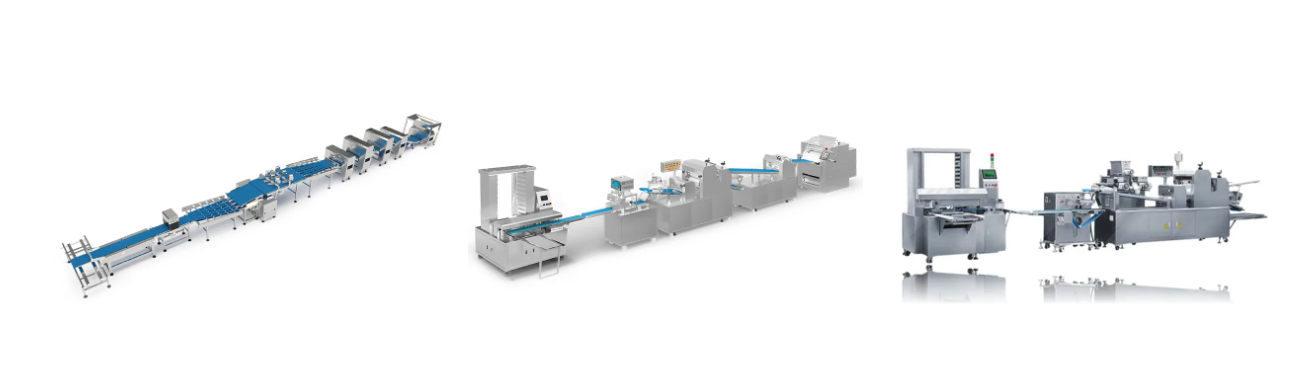 Clarify the Scope of the Bread Production Line Quotation
A useful
bread production line quotation
should explain both what is included and what remains the buyer's responsibility.Ask each supplier to list:
- Machine models and quantities.
Product-specific cutters, molds, and tooling.
Conveyors and control interfaces.
Required electrical and other utility connections.
Installation, commissioning, and operator training.
Recommended spare parts and wear items.
Packaging, shipping terms, and delivery schedule.
Warranty terms and after-sales support.
Also, confirm voltage, frequency, and phase requirements. The equipment must match the actual site power supply and the agreed configuration.
Most importantly, compare quotations against the same product, capacity target, and supply boundary. A lower price may simply cover fewer process steps.
Agree on Bread Production Line Capacity and Quality Testing
Before placing an order, agree on how the line will be tested.
A factory acceptance test should utilize defined products, materials, and operating conditions. Useful checks include:
Output during an agreed continuous run.
- Piece weight and permissible tolerance.
Cleaning access and routine adjustments.
Furthermore, distinguish between a successful factory trial and on-site performance. Final results also depend on installation, utilities, staff training, and upstream and downstream equipment.
A strong RFQ does not need to be complicated. It needs to be clear.
Prepare these five items first: product details, output targets, a scaled layout, dough and filling data, and the required supply scope. Collectively, these help the supplier propose a line that fits your process.
Haopai's company profile
describes their food automation equipment and customized solutions for specific process and capacity requirements.To discuss your project, share your product photos, recipe characteristics, shift targets, and factory layout with Haopai. These details provide a practical starting point for a
bread production line quotation
and a clear plan for the next phase of technical review.


