CE-Certified Bakery Equipment: Buyer’s Document Checklist
News Details

Purchasing baking machinery involves more than comparing speed, price, and output. International buyers also need clear proof that the equipment complies with the laws of the target market.
For buyers sourcing machinery for the European Union, CE marking is a key part of this process. However, a CE logo or a document labeled "CE certification" does not tell the whole story.
The safest approach is to review the mechanical documentation supporting this claim. This means checking the declaration, machine details, safety records, and instructions.
This guide explains how to evaluate CE-certified baking equipment, which documents to request, and how to apply these checks when discussing Haopai (Henghao Bakery) machines.
What Does "CE-Certified" Baking Equipment Actually Mean?
"CE-certified" baking equipment is a commonly used search term. More precisely, the CE marking indicates that the manufacturer has declared compliance with EU regulations applicable to the product.
There is no central EU office that issues a general CE certificate for each machine. Depending on the equipment and the required assessment process, the manufacturer may conduct its own compliance assessment or need a notified body.
Therefore, third-party certification is not always required. Similarly, a voluntary certificate cannot replace a proper conformity assessment or the manufacturer's declaration. Buyers should first ask which assessment process applies to the specific machine.
In addition, the CE mark does not prove yield, product taste, or service quality. These factors require separate trials and contract terms.
Baking Machine Compliance: Verify Applicable EU Regulations
Before reviewing the certification, confirm the destination country and planned market launch date.
Machinery placed on the EU market before January 20, 2027 must comply with the Machinery Directive 2006/42/EC. The Machinery Regulation (EU) 2023/1230 will generally apply from that date. Therefore, if an order is placed in 2026, it may require careful planning if the EU market launch is in 2027.
Ask the supplier to identify all EU regulations relevant to the supplied design. Don't assume that one familiar directive covers all characteristics.Additionally, buyers outside the EU should check local requirements. A CE-marked machine may still require local electrical approval, workplace inspections, or other documentation.
Mechanical documentation begins with a Declaration of Conformity
The signed Declaration of Conformity is a core document. Under the Machinery Directive, it is called the EC Declaration of Conformity. Under the new Machinery Regulation, it is the EU Declaration of Conformity.
Review these details:
-
Legal name and address of the manufacturer.
-
Machine description, model, and identification details.
-
Applicable laws and regulations.
-
Standards or other methods used to demonstrate compliance.
-
Any relevant details regarding the notified body.
-
Name, position, signature, and date of the signatory.
Next, compare the declaration with the quotation and the equipment delivered. A declaration for one model should not be accepted without explanation when applying it to another model.
The manufacturer remains responsible for the declaration, even if the company is headquartered outside the EU. Therefore, test documents from third-party testing companies should not be considered a substitute.
Matching CE-Certified Bakery Equipment to Its Nameplate
Reviewing documentation becomes more meaningful when it is associated with actual equipment.
Before shipment, request clear photos of the nameplate and the complete equipment. Then compare the model, serial number (if applicable), manufacturer details, and electrical specifications with the agreed order.
For example, a bakery may order a cake dispenser with a longer conveyor and different controls. In this case, please ask whether the delivered version remains covered by the compliance documentation.
Whenever possible, use the same model reference throughout the purchase order, inspection records, manuals, and declarations. If the names differ, please request a written explanation.
This simple step helps prevent confusion between standard catalog machines and customized export versions.
Review Technical Machinery Documentation and Safety Evidence
Technical documentation supports the manufacturer's claim of compliance. It records how the machine was designed, what risks were assessed, and how those risks were mitigated.
Buyers typically do not receive every confidential design drawing. However, they should confirm that the required documentation exists and can be provided to the relevant authorities.
For practical review, please request a document list or corresponding supporting materials covering:
-
Risk assessment.
-
Design details related to safety.
-
Relevant test report.
-
Key components.
-
Label and usage instructions.
Additionally, please inquire about the review process for custom modifications. A new feeding system, cutting device, or control panel may affect the supporting evidence required.
Harmonized standards are voluntary, but they can provide a presumption of conformity for the requirements they cover. Therefore, the standard list should be consistent with the actual design and its associated risks.
Verify Test Reports Supporting Bakery Machine Compliance
Test reports are only useful when their scope is consistent with the equipment.
First, please verify the report number, issuing organization, test date, model, and applicable standards. Next, please specify which version of the machine was tested and how the results apply to your order.
For example, a report on a control component alone does not demonstrate the compliance of a complete bread production line. Similarly, a test report for a small machine must have a clear basis before being applied to a larger model.
If the supplier presents a certificate from a notified body, please verify the body's identity and authorized scope through the official EU database.
Finally, distinguish between safety documentation and performance documentation. Electrical testing does not confirm the accuracy of dough weight. Production trials do not replace safety assessments.
Food Contact Machinery Documentation Requires a Separate Review
Bakery equipment comes into contact with dough, batter, cream, and fillings. Therefore, food contact verification requires a separate review.
Ask the supplier to identify the materials used in belts, hoppers, nozzles, seals, and other contact components. Then, please provide documentation related to these materials and their intended uses.
EU food contact regulations include a general framework and specific measures for certain materials. For plastic products covered by Regulation (EU) No. 10/2011, the Declaration of Compliance and supporting documentation are important components of the supply chain. National regulations may also be relevant for materials not subject to specific EU measures.
Don't rely solely on phrases like "food grade" or "stainless steel."
Instead, explain your formula, contact time, operating temperature, and cleaning method. Conveyor belts suitable for one application may require further evaluation for another.
The User Manual Is Essential Documentation for Bakery Machinery
Clear instructions help employees operate, clean, and maintain equipment safely. They also help buyers prepare for installation before delivery.
Please request the manual in advance to review the following:
-
Intended use and operating limits.
-
Installation and public utility needs.
-
Safe operation and shutdown.
-
Cleaning and maintenance procedures.
-
Potential risks and warnings.
-
Troubleshooting and spare parts.
Confirm the language requirements of the destination country. Additionally, ensure that the manual describes the controls and options actually provided.
For practical verification, please ask your operator to read a cleaning procedure. Can they execute it without hesitation? If key steps are unclear, resolve the issue before the machine leaves the factory.
Apply Bakery Machine Compliance Checks to Haopai Products
On Haopai's website, the business entity is identified as Wuxi Henghao Machinery Technology Co., Ltd. It showcases food automation equipment and technical support. Buyers can access more information through the Haopai/Henghao Bakery Company Profile.
Its product lineup includes bread production lines, croissant lines, dough sheeters, cake dispensers, cookie dispensers, cake cutting machines, filling machines, and cake aeration systems.These product types suggest different questions for your procurement review:
| Product type | Suggested Documentation and Inspection Focus |
|---|---|
| Bread and croissant production lines | Line layout, transfer points, interlocking controls, and protective devices |
| Dough Laminator | Roller access, safe feeding, and cleaning |
| Cake and Cookie Dispenser | Nozzle material, moving parts, and recipe conversion |
| Cake cutting machine | Blade access, guards, and safe maintenance |
| Cake aeration system | Cleaning, product contact components, and utility requirements |
Browse the Haopai Bakery Machinery Product Range to shortlist equipment. Please then request compliance documentation for the exact model and configuration. A product list alone cannot establish CE conformity.
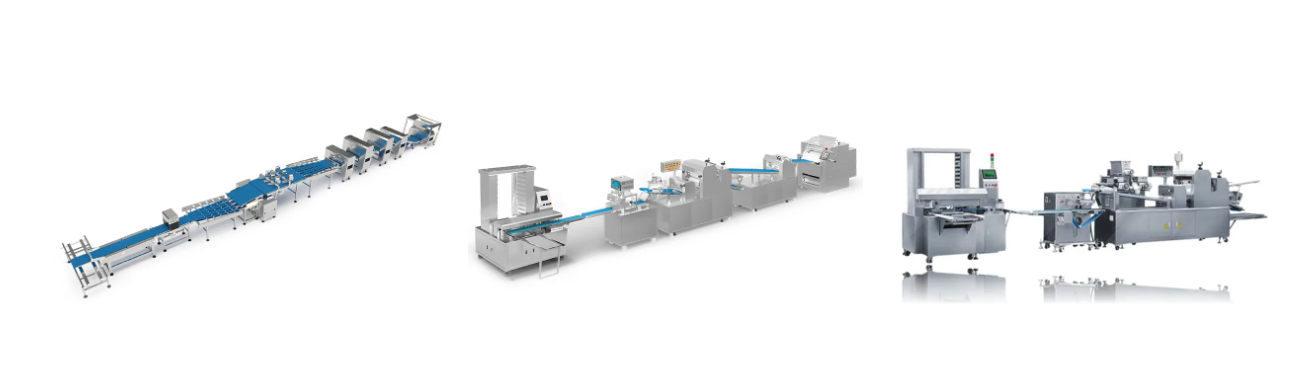
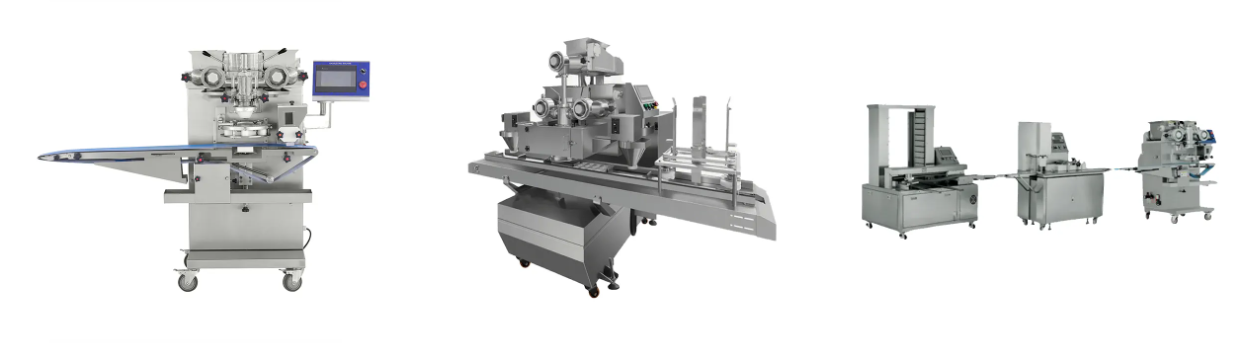
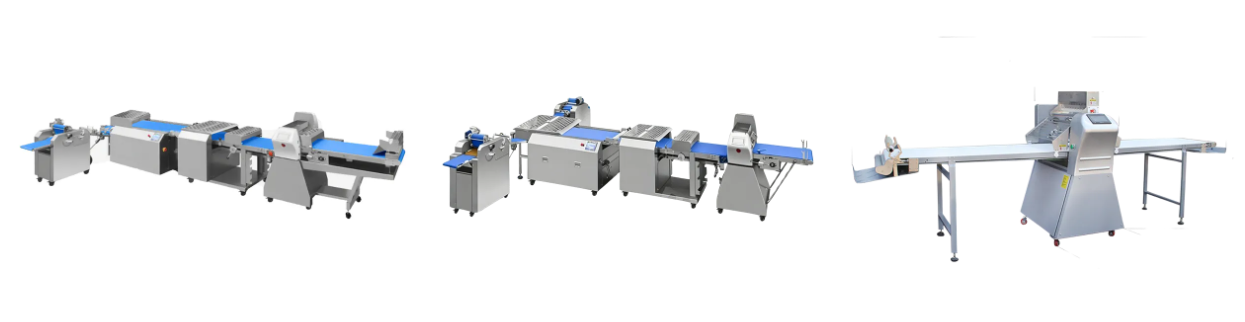
Complete production line machinery documentation must define responsibilities
Purchasing multiple machines for a single production process creates another question: Who is responsible for the final assembly?
A dispenser, conveyor, and cutting machine may each have their own records. However, shared controls and connections may introduce risks at the interfaces where they operate together.
Therefore, the supply scope must be clearly defined in writing. Please specify who will evaluate the integrated system and who will issue any required declarations for it. The CE marking at the component level does not automatically cover the finished product.
If partially completed machinery is supplied, it is necessary to clarify the type of declaration, assembly instructions, and the work that must be completed before use.
This is particularly useful when one supplier provides the equipment and another company is responsible for integration at your factory.
Final Checklist for Buyers of CE-Certified Bakery Equipment
Before approving shipment, please ensure that the documentation tells a clear and consistent story.
The equipment identifier must match the order. The declaration must cover the equipment being supplied. Supporting documentation must be consistent with its design. The manual must explain safe usage. Food contact verification must be consistent with your process.
Next, please agree on a factory acceptance test. Include practical checks of protective devices, emergency stops, controls, cleaning access, and agreed-upon production results. This test supports the acceptance decision; it does not replace the legal compliance assessment.
For the Haopai project, please provide your destination, recipe, production targets, factory layout, and delivery schedule during the inquiry phase. Please then request a list of documents specific to the model.
Clear machinery documentation makes bakery machinery compliance easier to evaluate—helping buyers choose equipment with greater confidence.


