Encrusting Machine Trials: A Buyer’s Checklist
News Details
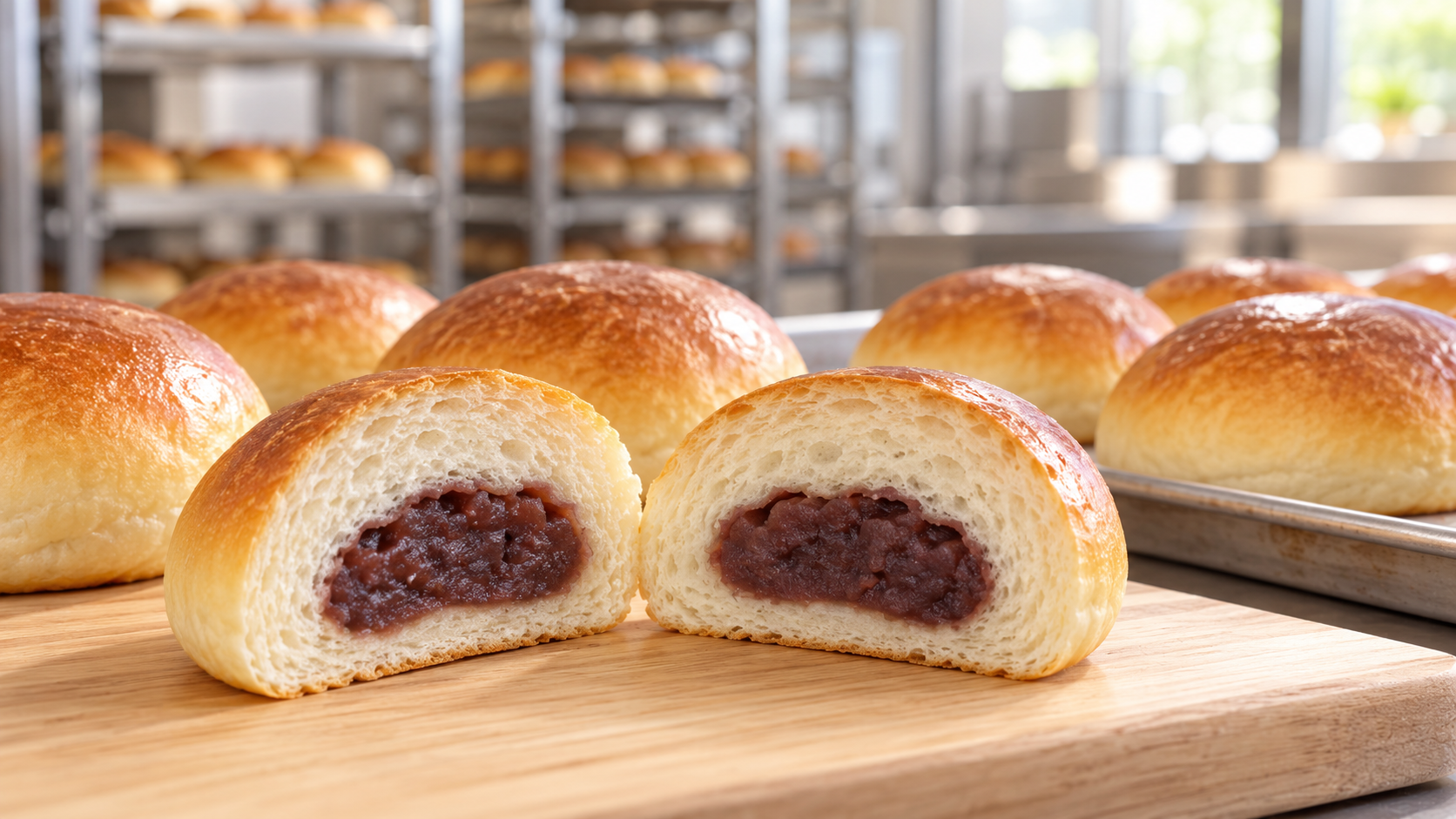
A filled cookie may look perfect on a sample tray. However, appearance alone does not show whether a machine can make the same product throughout a shift.
For food factories, central kitchens, and commercial bakeries, an encrusting machine trial is a chance to check how equipment handles real ingredients under agreed conditions. It should cover weight, filling ratio, sealing, output, and cleaning.
A useful trial also helps buyers compare suppliers fairly. Instead of judging a short video, you can review measured results and clear limits.
This checklist explains what to prepare, what to test, and what to ask your encrusting machine supplier before placing an order.
How anAutomatic Encrusting MachineWorks
An automatic encrusting machine feeds an outer dough and an inner filling through a forming assembly. The dough surrounds the filling, while a cutting and closing mechanism divides the flow into separate pieces.
Depending on the product and machine setup, the formed pieces may then move to stamping, rounding, tray arranging, cooking, or freezing.
However, recipes behave differently. Soft dough may stick, a firm filling may feed unevenly, and large particles may affect flow or sealing.
Therefore, a successful demonstration with one recipe does not prove that every product will run equally well. The trial should use materials that represent your actual production.
Prepare Real Materials for the Encrusting Machine Trial
Before the test, send the supplier a clear product brief.
Include:
-
Product photos and a finished sample.
-
Target piece weight and dimensions.
-
Dough recipe and preparation method.
-
Filling type, texture, and largest particle size.
-
Dough and filling temperatures during normal production.
-
Target filling percentage.
-
Required output and shift length.
-
The next process, such as baking, steaming, or freezing.
Also, describe how ingredients change during a shift. For example, dough may become firmer after resting, while a warm filling may flow more easily.
Agree on the amount of material needed. There should be enough for setup, a steady run, sampling, and any planned repeat tests.
If substitute ingredients are necessary, record them clearly. Otherwise, the results may be difficult to reproduce at your factory.
Agree on Pass Criteria with the Encrusting Machine Supplier
Set acceptance limits before the trial starts. Without them, buyers and suppliers may judge the same results differently.
A simple test sheet can include:
| Check | What to record |
|---|---|
| Piece weight | Target, permitted range, and measured samples |
| Filling percentage | Target, test method, and permitted variation |
| Sealing | Open seams, exposed filling, and leaks |
| Shape | Size, height, and visible defects |
| Output | Total pieces and acceptable pieces over a timed period |
| Waste | Setup waste, rejects, spills, and remaining material |
| Changeover | Time from the last acceptable old product to the first acceptable new product |
| Cleaning | Dismantling, cleaning, inspection, and reassembly time |
There is no single tolerance that suits every food product. Therefore, choose limits that match your product specification and agree on how they will be measured.
Run a Filling Ratio Test with a Clear Definition
A filling ratio test checks whether each piece contains the intended share of filling.
First, define the term. “Filling percentage” and “dough-to-filling ratio” describe the same composition in different ways, but the numbers look different.
For example, a 50 g unbaked product containing 20 g of filling has:
Filling percentage = 20 ÷ 50 × 100 = 40%
Its dough-to-filling ratio is 30:20, or 60:40.
Next, collect samples after the machine reaches steady operation. Take further samples during the run and after a hopper refill or speed change.
Where dough and filling can be separated cleanly, weigh the whole piece and the recovered filling. However, sticky materials may be hard to separate without loss. In that case, agree on another suitable measurement method with the supplier and record its limits.
Do not judge filling percentage from a cut photo alone. A cross-section shows placement and shell thickness, but it does not directly measure filling mass.
For products with two fillings, define both the total filling percentage and the proportion of each filling.
Check Weight and Sealing on the Automatic Encrusting Machine
A stable total weight does not always mean a stable filling ratio. More dough can hide a shortfall in filling.
Therefore, check total weight and filling content separately.
Collect a series of consecutive pieces rather than selecting only the best examples. Record the average weight, the lightest and heaviest pieces, and the number outside the agreed limits.
Then cut several samples through the center. Look for:
-
Uneven shell thickness.
-
Filling pushed too close to the surface.
-
Air pockets.
-
Weak closing points.
-
Exposed filling or cracks.
Next, put samples through your normal cooking or freezing process. A piece that looks sound after forming may split, leak, or lose shape later.
This final-product check helps connect machine performance with the quality customers actually receive.
Measure Useful Output During the Encrusting Machine Trial
A short run at high speed may not reflect normal production.
Instead, agree on a test period long enough to include routine feeding and handling. Record all stops, adjustments, and rejected pieces during that period.
A useful measure is:
Acceptable output per minute = acceptable pieces ÷ total elapsed test minutes
For example, 1,800 acceptable pieces produced over 30 elapsed minutes equal 60 acceptable pieces per minute.
This differs from a speed setting shown on the control screen.
Also, check the equipment after forming. A stamping unit, tray arranger, or manual transfer step may limit the overall rate.
Ask the supplier to explain which product size, recipe, and configuration support the quoted capacity.
Test Changeovers and Cleaning with the Encrusting Machine Supplier
If you plan to run several products, include a realistic changeover.
For example, switch between two piece weights, fillings, or shapes. Record which parts must change, what tools are needed, and how much material remains inside the machine.
Then check whether operators can restore the settings and produce acceptable pieces again.
Cleaning deserves a separate review. Ask the supplier to demonstrate access to food-contact parts using the approved shutdown and cleaning procedure.
Check:
-
Access to hoppers, feed parts, nozzles, and cutters.
-
Areas where dough or filling can remain.
-
Parts that require tools for removal.
-
Approved cleaning methods.
-
Drying and reassembly steps.
Do not assume every part can be pressure-washed. Furthermore, a visibly clean machine does not prove that allergen residues have been removed. Cleaning validation should follow your factory’s food safety plan.
Match Haopai Products to Your Encrusting Machine Trial
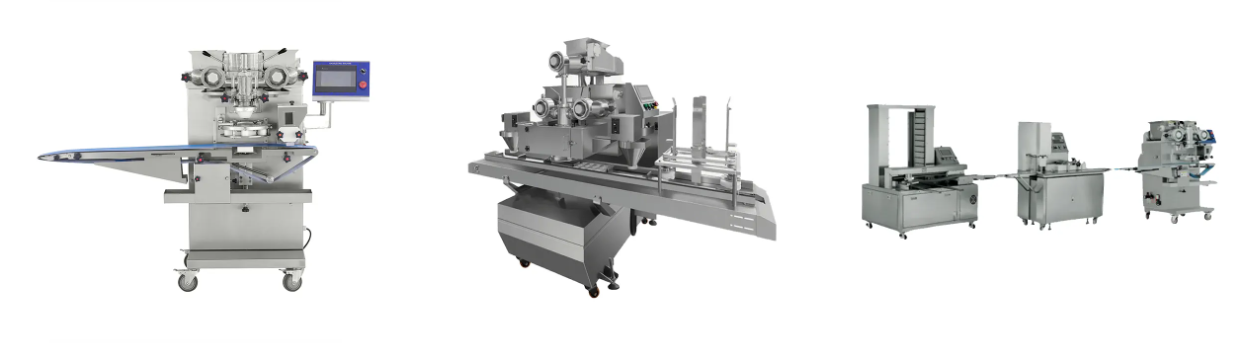
Haopai (Henghao Bakery) lists an Automatic Multi-Function Encrusting Machine with PLC touchscreen control and adjustable dough thickness, filling quantity, piece weight, and size.
Its published specifications include an adjustable capacity of 10–120 pieces per minute and a product weight range of 10–150 g. These figures provide a starting point for discussion; performance should be confirmed with your recipe and selected setup.
Haopai also lists a Mochi Ice Cream Making Machine, a Fully Automatic Maamoul Production Line, and an Automatic Encrusting & Tray-Arranging Machine. These options allow buyers to discuss forming, stamping, and tray handling as related process steps.
Explore the Haopai bakery machinery and encrusting equipment range before choosing the trial setup. Confirm which attachments and downstream machines are included in the proposal.
Document the Encrusting Machine Trial Before Ordering
At the end of the trial, request a report that records:
-
Machine model and installed tooling.
-
Recipe version and material temperatures.
-
Tested settings and operating speed.
-
Weight and filling ratio results.
-
Acceptable output, rejects, and waste.
-
Cleaning and changeover observations.
-
Remaining issues and agreed follow-up actions.
Keep photos and videos linked to the recorded conditions. If the recipe or equipment changes, identify which checks need to be repeated.
Haopai’s company profile outlines its food automation equipment and custom solutions for specific process and capacity needs.
To discuss a suitable trial, share your product sample, dough and filling details, target weight, and required output with Haopai. A clear brief and measured results make it easier to choose an automatic encrusting machine that fits your production needs.


