Predictive Maintenance for Bakery Equipment: Sensors, KPIs and Spare Parts Planning
News Details

Modern bakeries rely on automated machines to keep production fast, stable, and consistent. From dough mixing and forming to baking and packaging, every machine plays a role in the final product. When one key machine stops, however, the whole production line may slow down or even stop.
That is why more B2B bakery buyers are looking beyond basic preventive maintenance. Predictive maintenance for bakery equipment uses machine data, sensors, and production KPIs to identify possible problems before they cause an unexpected breakdown.
For industrial bakeries, this approach can reduce unplanned downtime, improve product consistency, and make spare parts planning easier. It can also help maintenance teams move from “fix it after failure” to “act before failure.”
What Is Predictive Maintenance for Bakery Equipment?
Traditional bakery machine maintenance often follows a fixed schedule. For example, a motor may be checked every month, a belt may be replaced every six months, and other parts may be inspected after a set number of operating hours.
This approach is useful, but it does not always reflect the real condition of a machine.
Predictive maintenance works differently. It uses operating data to understand how equipment is performing. Sensors can monitor temperature, vibration, pressure, speed, current, and other signals. When a value changes from its normal range, the maintenance team can investigate the cause.
For example, a motor may normally operate with stable vibration and temperature. If vibration slowly increases over several weeks, this may indicate bearing wear or another mechanical issue. The team can then inspect the motor before a serious failure occurs.
Therefore, predictive maintenance is not simply about adding more sensors. It is about collecting useful data and using it to support better maintenance decisions.
Sensors That Support Bakery Machine Maintenance
Sensors are an important part of a modern maintenance system. However, bakeries do not need to measure everything. The right sensors depend on the machine, production process, and possible failure points.
Temperature Sensors
Temperature is important for ovens, motors, bearings, control cabinets, and other components.
An unusual temperature increase may indicate poor ventilation, overload, friction, or component wear. For baking equipment, temperature data can also help maintenance teams identify problems that may affect product quality.
Vibration Sensors
Vibration sensors are especially useful for motors, fans, pumps, conveyors, and rotating components.
A change in vibration may indicate an unbalanced part, loose connection, bearing wear, or alignment problem. Monitoring vibration over time can provide an early warning before the component fails.
Pressure and Air Sensors
Many bakery machines use pneumatic systems. Pressure sensors can help operators monitor whether the air supply remains within the required range.
A sudden pressure drop may be caused by leakage, valve problems, or other system issues. Early detection can prevent interruptions to automated production.
Speed and Position Sensors
Modern bakery production lines often depend on accurate movement and timing. Speed and position sensors can help monitor conveyors, cutting systems, forming units, and other moving parts.
If actual speed starts to differ from the normal setting, maintenance teams can check the motor, drive, belt, or control system.
PLC and Control-System Data
Sensors become more useful when their data is connected to the machine control system.
For example, PLC systems can record operating conditions, alarms, cycle times, and machine status. Henghao's fully automated industrial bread production line uses PLC control together with photoelectric sensing to support precise and adjustable production.
This type of data can also support future maintenance analysis.
Using Bakery Equipment OEE to Find Maintenance Problems
One of the most useful KPIs for industrial bakeries is bakery equipment OEE.
OEE stands for Overall Equipment Effectiveness. It looks at three main factors:
OEE = Availability × Performance × Quality
Availability measures how much planned production time the equipment is actually running.
Performance measures whether the machine is producing at its expected speed.
Quality measures how much of the output meets the required quality standard.
For example, a bakery may have high production capacity on paper. However, if the line frequently stops for small faults, actual output may be much lower.
OEE can help maintenance teams identify this hidden loss.
If availability falls, the team can investigate downtime and machine failures. If performance falls, they can check speed, wear, or process settings. If quality falls, they can look at machine accuracy, temperature, pressure, or other process conditions.
As a result, bakery equipment OEE should not be used only as a production KPI. It can also become a useful maintenance indicator.
Key KPIs for Predictive Bakery Machine Maintenance
OEE is only one part of the picture. A complete maintenance program should track several KPIs.
Mean Time Between Failures
MTBF shows the average operating time between equipment failures.
A rising MTBF usually means the equipment is becoming more reliable. If MTBF falls, maintenance teams should look for repeated failure patterns.
Mean Time to Repair
MTTR measures how long it takes to restore equipment after a failure.
A high MTTR may point to difficult troubleshooting, slow spare parts delivery, or a lack of technical support.
Unplanned Downtime
Unplanned downtime shows how much production time is lost because of unexpected machine problems.
Tracking this number by machine can help identify which equipment needs more attention.
Spare Parts Consumption
Maintenance teams should also record which parts are replaced most often.
For example, belts, bearings, sensors, electrical components, and cutting parts may have different replacement cycles. Historical data can help teams decide which parts should be kept in stock.
Spare Parts Planning for Bakery Equipment
Predictive maintenance works best when it is connected to good spare parts planning.
Finding a problem early is not enough if the required part is not available.
First, bakeries should create a spare parts list for each major machine. The list should include part names, model numbers, quantities, replacement frequency, and supplier information.
Next, classify parts according to their importance.
Critical parts can stop the whole production line and should normally have backup stock.
Important parts may reduce production capacity but may not stop the complete line.
Standard parts are easier to source and may not require large inventory levels.
This approach helps control inventory costs while reducing the risk of long production delays.
For international bakery equipment buyers, supplier support is also important. Henghao states that it provides spare parts support during its machinery warranty period, as well as long-term technical consultation and after-sales support.
How Henghao Bakery Equipment Supports Reliable Production
Henghao Bakery Machinery provides a range of automated food processing and bakery solutions. Its product portfolio includes bread production lines, cake machines, cookie equipment, pastry production lines, filling machines, and other food processing systems.
For example, Henghao's automated pastry sheeter uses PLC-controlled sheeting to help maintain consistent dough thickness. Its industrial bread production equipment can integrate forming, filling, cutting, conveyors, PLC controls, and photoelectric sensing systems.
Henghao also offers automated croissant production equipment. Its complete croissant production line integrates dough homogenizing, slicing, separating, and rolling processes, with production capacity listed at approximately 4,000–9,000 pieces per hour depending on product specifications.
For buyers looking for different production solutions, you can explore Henghao's complete product range.
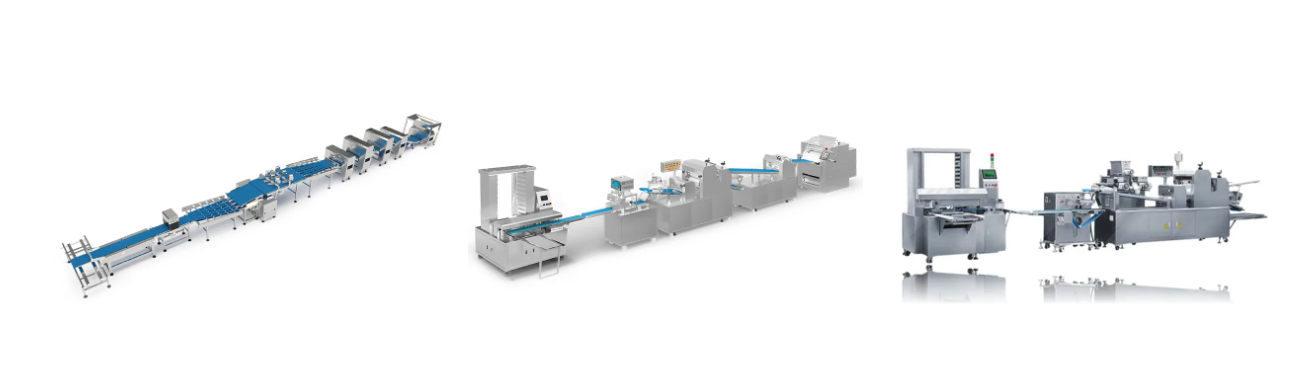
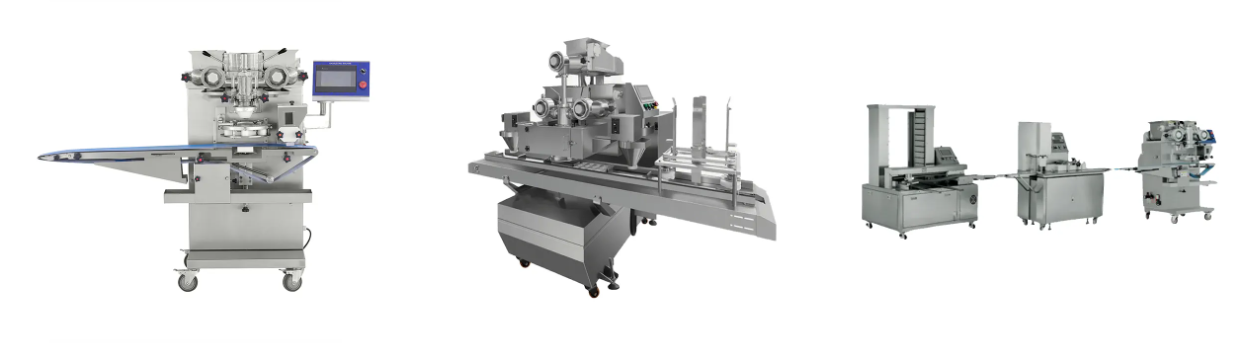
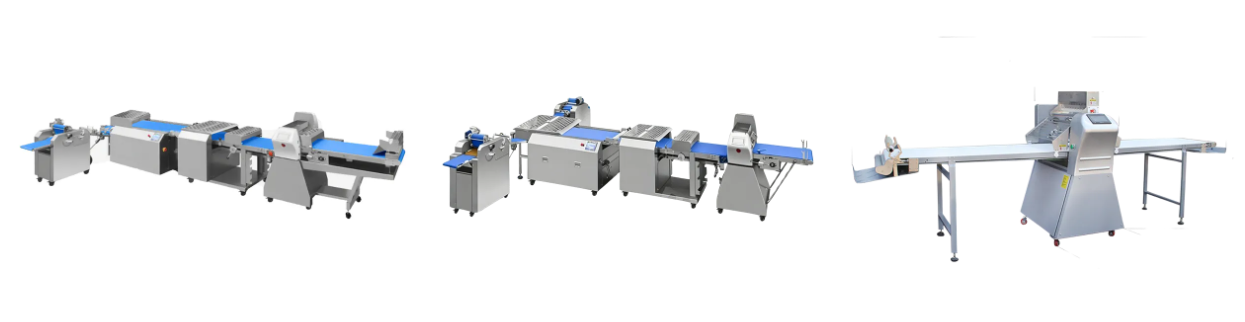
The company also provides customized automation and technical support based on customer production needs.
A Practical Bakery Machine Maintenance Workflow
A simple predictive maintenance workflow can be divided into five steps.
Step 1: Establish a normal baseline.
Record normal temperature, vibration, speed, pressure, cycle time, and production output.
Step 2: Collect machine data.
Use sensors, PLC systems, machine alarms, and production records to track operating conditions.
Step 3: Watch for changes.
A single unusual reading does not always mean failure. However, a continuous trend may require inspection.
Step 4: Connect maintenance data with OEE.
Compare machine conditions with availability, performance, quality, and downtime data.
Step 5: Prepare spare parts before failure.
When data shows a component may be reaching the end of its useful life, check stock and arrange replacement parts in advance.
This workflow is simple enough for many industrial bakeries to start with. Over time, the system can become more advanced as more operating data is collected.
Predictive Maintenance vs. Preventive Maintenance
Preventive and predictive maintenance are not competitors. In many bakeries, they work together.
Preventive maintenance uses a schedule. It is suitable for routine cleaning, lubrication, inspection, and replacement tasks.
Predictive maintenance uses actual machine conditions. It is useful when equipment has sensors or other data sources that can show changes in performance.
For example, a bakery may still clean and inspect a conveyor on a fixed schedule. At the same time, vibration data can be used to identify possible bearing problems between scheduled inspections.
This combination gives maintenance teams both structure and flexibility.
How to Build a Predictive Maintenance Plan for a Bakery
A bakery does not need to transform its entire factory at once.
Start with the machines that have the greatest effect on production. These may include main bread lines, mixers, forming machines, ovens, conveyors, or other high-use equipment.
Then identify the most common failure points. Add suitable sensors where they can provide useful information.
After that, track a small group of KPIs, such as OEE, unplanned downtime, MTBF, MTTR, and spare parts consumption.
Finally, review the data regularly.
The goal is not to collect as much data as possible. The goal is to collect the right data and turn it into practical maintenance actions.
Conclusion: Make Bakery Machine Maintenance More Data-Driven
Predictive maintenance can help industrial bakeries improve equipment reliability, reduce unexpected downtime, and plan spare parts more effectively.
Sensors provide machine condition data. KPIs such as bakery equipment OEE, MTBF, and downtime show how equipment affects production. Spare parts planning then turns these insights into practical action.
For bakery equipment buyers, maintenance should also be considered when selecting a machine. A reliable production line should be supported by clear controls, accessible maintenance points, technical documentation, spare parts, and after-sales service.
Henghao Machinery provides automated bakery equipment and customized food processing solutions for different production needs. To learn more about the company and its capabilities, visit Henghao Machinery or explore the Henghao Bakery Machinery product range.


