Pastry Sheeter vs Dough Laminator: Which System Fits Your Products?
News Details
Choosing the right dough processing equipment is a major decision for growing bakeries and industrial food plants. As your business expands, rolling dough by hand or using small benchtop tools quickly creates production bottlenecks.
Manual dough rolling takes too much time and creates uneven sheet thickness. Even worse, uneven dough layers ruin product baking quality and waste expensive butter or shortening.
Investing in anautomatic pastry sheeter dough laminatorsetup fixes these issues. Modern machinery flattens dough quickly, preserves delicate gluten structures, and keeps product quality consistent day after day.
However, many bakery owners wonder whether they need a standalone pastry sheeter or a full lamination system. Picking the wrong machine can slow down your output or add unneeded equipment costs.
This guide compares both machines to help you choose the best technology for your bakery products, plant footprint, and output goals.
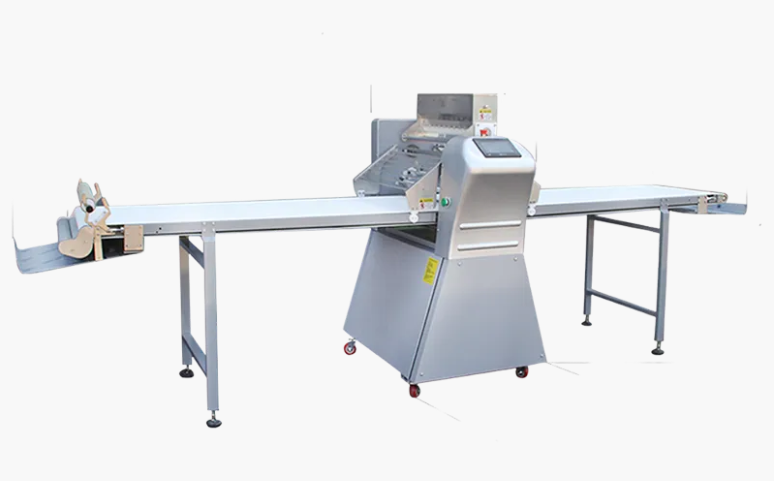
Understanding the Basics: Pastry Sheeter vs Industrial Dough Laminator
While both machines process dough sheets, they work in very different ways. Understanding their core designs helps you match them to your daily production routine.
What Is a Pastry Sheeter?
A pastry sheeter passes a single block of dough back and forth between two counter-rotating rollers. With each pass, the operator or automated controller reduces the roller gap to make the dough sheet progressively thinner.
-
Operation: Batch processing (dough moves forward and backward).
-
Best For: Pie crusts, pizza dough, fondant, flour tortillas, and simple shortcrust pastries.
-
Labor Requirement: Requires a line worker to flip dough, apply dust flour, and fold butter layers manually between rolling passes.
What Is an Industrial Dough Laminator?
An industrial dough laminator is a continuous, automated processing line. Instead of rolling dough back and forth, it moves dough continuously forward on conveyor belts.
The system automatically places fat blocks (butter or margarine) onto the dough sheet. Next, specialized folding arms create exact alternating layers of fat and dough before sending the sheet through multiple reduction rollers.
-
Operation: Continuous inline flow (dough moves in one forward direction).
-
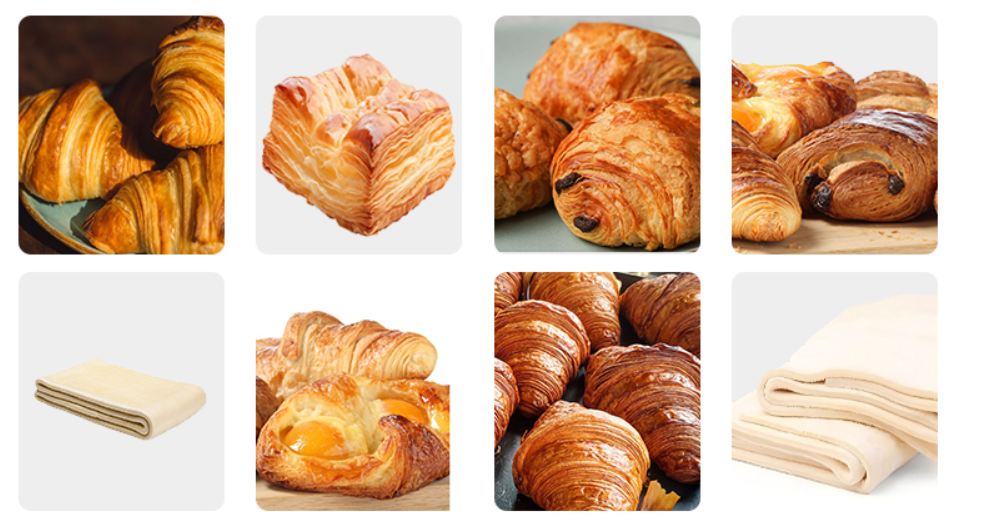
Best For: Croissants, Danish pastries, puff pastry dough, and layered biscuits.
-
Labor Requirement: Fully automated with minimal manual touch points.
Comparing Product Compatibility for Your Automatic Pastry Sheeter Dough Laminator
Your product line is the most important factor when choosing between these two systems. Matching machine mechanics to your recipe structure guarantees better texture, volume, and taste.
| Product Type | Recommended Equipment | Why It Works Best |
| Pie Crusts & Tart Shells | Pastry Sheeter | Needs simple sheet thinning without layered butter structures |
| Pizza Dough & Flatbreads | Pastry Sheeter | Rapidly flattens dense, non-laminated yeast doughs |
| Croissants & Pain au Chocolat | Industrial Dough Laminator | Builds precise 16 to 48 butter layers for flaky crumb structure |
| Puff Pastry Sheets | Industrial Dough Laminator | Creates hundreds of micro-layers without melting fat |
Single-layer products like pie shells or flour tortillas do not need complex fat layering. Therefore, a compact automatic pastry sheeter dough laminator handles these items efficiently without high equipment costs.
Conversely, layered dough products rely on thin, alternating layers of flour dough and cold fat. If you crush these layers or let the butter melt, your croissants turn out dense and greasy instead of light and flaky. Continuous laminating lines protect these delicate layers at high speeds.
Output Capacity and Workflow Integration Across Your Puff Pastry Production Line
Equipment size and speed must match your target output. A small bakery needs flexibility, while a large industrial plant requires continuous throughput.
Pastry Sheeter Batch Workflow
In a traditional sheeter workflow, operators place a dough block onto the conveyor. The machine runs the dough back and forth through the rollers to reduce its thickness. Next, workers manually add butter, fold the dough sheet by hand, and run it through the rollers again before moving it to a cutting table.
Continuous Dough Laminator Inline Workflow
In a continuous lamination workflow, an extruder feeds dough directly onto the main conveyor belt. An automated pump deposits a continuous ribbon of butter, and automated folding arms create uniform fat layers. The sheet then passes through a series of multi-roll reduction stations and proceeds straight to automated cutting and forming machinery.
Integrating continuous equipment into a complete production line allows your factory to process hundreds of kilograms of dough per hour.
Continuous laminators feed dough directly into cooling tunnels, sheeting stations, makeup tables, and automated cutters. As a result, your team saves hours of manual labor and eliminates production delays between steps.
On the other hand, pastry sheeters work in distinct batches. Workers must move dough trays manually from the sheeter to the retarder fridge for chilling. This batch method works well for smaller craft bakeries, but it creates line bottlenecks in large industrial facilities.
Henghao Bakery (Haopai Auto) Solutions for Bakery Lines
Selecting reliable dough equipment requires working with an experienced manufacturing partner. Henghao Bakery (Haopai Auto) engineers and manufactures high-performance bakery production equipment for commercial food factories around the world. You can read more about our technical expertise and plant facilities on our about Haopai Auto page.
| Equipment Feature | Technical Standard | Operational Advantage |
| Machine Frame | Food-Grade SUS304 Stainless Steel | Resists rust and supports easy washdown cleaning |
| Control System | Multi-Language Touch Screen PLC | Simple operation with stored recipe memory |
| Dough Thickness Control | Precision Servo Motors | Maintains exact sheet thickness across all passes |
| Safety Features | Interlocked Safety Covers & Emergency Stops | Protects plant workers during high-speed operations |
Haopai Auto machinery uses heavy-duty SUS304 stainless steel frames to meet strict global food hygiene standards. In addition, our automated dough processing lines feature gentle belt tension controls that prevent dough stress and tearing.
By choosing Haopai Auto equipment, bakery operators gain stable daily throughput, lower maintenance costs, and repeatable product quality across every shift.
Key Factors to Consider Before Buying
Before purchasing new dough machinery, review your factory setup and product plans by evaluating these key steps:
-
Map Your Product Mix: List all the products you plan to make. If laminated pastries make up over 50% of your production volume, choose a continuous laminator.
-
Calculate Daily Output Goals: Match machine speeds with your baking oven capacity. Industrial lines can process over 1,000 kg of laminated dough per hour.
-
Measure Available Floor Space: Pastry sheeters take up very little floor space. In contrast, continuous laminating lines can measure 10 to 30 meters in length.
-
Evaluate Cleaning and Maintenance: Look for open-frame designs, quick-release conveyor belts, and scrapers that simplify daily sanitation.
-
Verify Vendor Technical Support: Work with machinery partners that offer readily available spare parts, clear manuals, and fast remote support.
Investing in the right dough sheeting or laminating system lowers ingredient waste, improves dough consistency, and helps your commercial bakery scale up successfully.


