How to Calculate Bakery Production Line Capacity Without Creating Bottlenecks
News Details
Running a high-volume commercial bakery is a complex job. When you want to grow your business, you need clear data. Therefore, knowing your true factory output is very important. Many factory owners buy fast machinery, but they still struggle with slow production. Why does this happen? Usually, the issue comes down to hidden flow problems.
In this guide, we will show you how to master bakery production line capacity calculation step by step. Also, we will explain how to perform a practical bakery bottleneck analysis. By using these steps, you can balance your bread line capacity and make your facility far more profitable.
Understanding Bakery Production Line Capacity Calculation Basics
First, let us look at what line capacity actually means. In simple words, capacity is the top number of baked items your system can make in a set period. Usually, owners measure this output by the hour or by the shift. However, calculating this number is not just about reading machine user manuals.
To begin, you must learn the difference between two key terms:
-
Theoretical Capacity: This is the maximum speed your machine can run under perfect conditions without stopping.
-
Actual Capacity: This is the real amount of usable product you make after accounting for machine warm-up, batch changes, minor stops, and cleaning.
For an accurate calculation, always base your operational goals on actual capacity rather than theoretical numbers. Otherwise, you will set unrealistic output targets that your staff cannot reach.
Actual Capacity = Theoretical Speed × Planned Running Time × Overall Equipment Effectiveness (OEE)
How to Conduct a Step-by-Step Bakery Bottleneck Analysis
Next, you must find where your line slows down. A bottleneck is simply the single stage in your factory that runs at the slowest pace. Because every item must pass through this stage, the slowest machine sets the top speed for your entire factory floor.
To perform a thorough analysis, track every step in your baking process, including:
-
Dough mixing and bowl tipping
-
Dough sheeting, laminating, and divider molding
-
Prooving and rising time
-
Tunnel oven baking
-
Cooling conveyors
-
Depanning, slicing, and final packaging
During your review, measure the exact hourly output of each single station. The step with the lowest hourly output is your primary bottleneck. For example, if your divider processes 2,000 dough balls per hour, but your oven only bakes 1,200 loaves per hour, your oven limits your entire operation. Therefore, buying a faster divider will not increase your total output until you fix your oven constraint.
Step 1: Calculate Raw Dough Mixing and Handling Capacity
First, look at your mixing room. Mixing is a batch process, while shaping and baking are continuous processes. Thus, you must convert batch times into continuous hourly rates.
To calculate your mixing potential, add up the total time for loading ingredients, mixing time, and bowl emptying time. Then, divide 60 minutes by your total cycle time to find batches per hour. Finally, multiply the batches per hour by your mixer dough capacity in kilograms.
-
Example: If one batch takes 15 minutes total, your mixer can run 4 batches per hour. If each batch yields 200 kg of dough, your mixing step yields 800 kg of dough per hour.
Step 2: Measure Shaping and Bread Line Capacity
Second, evaluate your shaping and forming equipment. At this point, dough moves from bulk batches into continuous units. Your makeup line must handle dough at the exact speed your mixer produces it.
When measuring bread line capacity, pay close attention to dough sheeting, folding, and cutting accuracy. If your shaping machines are poorly synchronized, dough backs up on the belts. As a result, dough over-proofs while waiting, which damages your product texture and leads to wasted ingredients.
To maintain smooth movement, ensure your shaping line speed matches your targeted hourly dough mass. Modern automated makeup lines allow operators to adjust belt speeds with digital controls, keeping dough moving evenly into the proover.
Step 3: Evaluate Prooving, Baking, and Cooling Times
Third, examine the thermal stages of your bakery. Thermal stages take time and space. Consequently, they are the most common places for factory bottlenecks to form.
Unlike mechanical cutters, you cannot simply speed up an oven or a proover without changing product quality. If bread stays in the oven for too short a time, it comes out raw. Conversely, if it stays in too long, it burns.
Therefore, to calculate thermal capacity, use this practical formula:
Thermal Hourly Capacity = Total Baking Area (m²) ÷ (Item Size m² × Required Bake Time in Hours)
If your proover or oven cannot keep up with your shaping line, your front-end machines will stand idle. Therefore, balancing thermal residence times with mechanical line speeds is vital for smooth flow.
Step 4: Assess Packaging and End-of-Line Speed
Fourth, do not forget the end of your line. Many factory managers balance their mixing, shaping, and baking steps perfectly, only to watch finished goods pile up at the packaging table.
Packaging involves cooling, slicing, tray packing, flow wrapping, and boxing. Because baked goods come out of cooling towers continuously, your packaging area must run slightly faster than your oven. If a packaging machine jams or runs too slowly, the whole upstream line must stop, causing costly waste.
5 Common Causes of Bakery Production Line Bottlenecks
Beyond machine speeds, several hidden operational factors create unexpected slowdowns on the factory floor:
-
Unplanned Machine Downtime: Poor maintenance leads to sudden breakdowns that stop production.
-
Slow Product Changeovers: Changing tooling or recipes takes too long, dropping overall shift output.
-
Inconsistent Raw Materials: Variations in flour quality or water temperature change dough behavior, slowing down shaping heads.
-
Manual Handling Delays: Relying on human labor to move trays or feed machines creates variable speeds.
-
Poor Floor Layout: Long physical distances between stages cause unnecessary movement and delay.
How Henghao Bakery Machinery Eliminates Production Bottlenecks
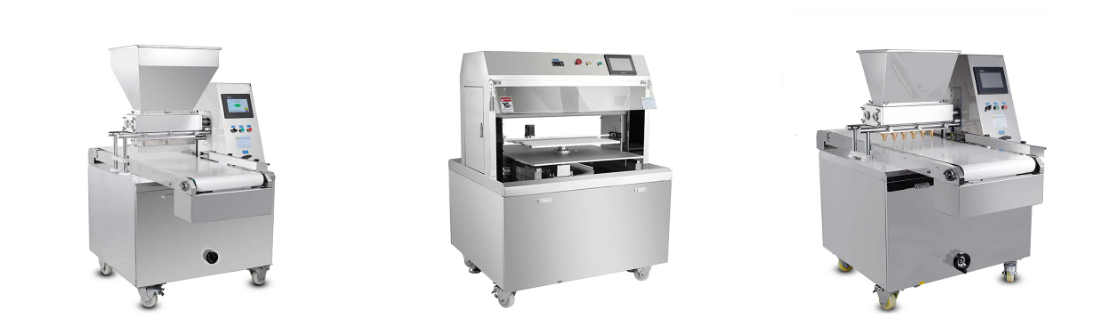
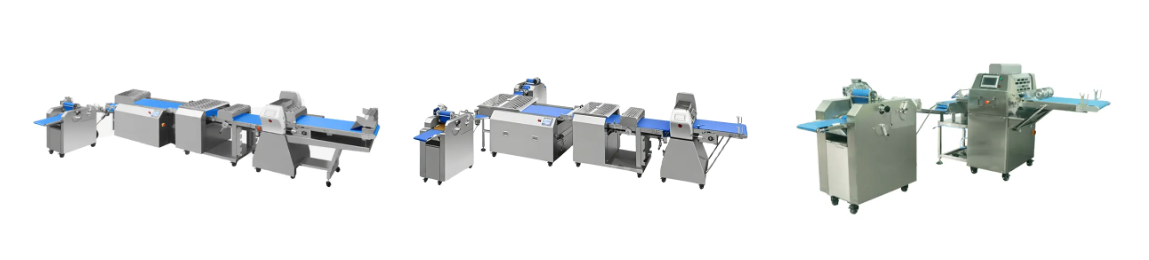
To eliminate bottlenecks permanently, you need high-performance machinery designed for continuous, balanced output. At Henghao Bakery (Haopai Auto), we design and build full-scale automated systems that integrate every step of your production process seamlessly.
Our complete machinery lineups eliminate speed mismatches across dough processing, shaping, baking, and handling. By choosing high-precision automated systems, you can achieve:
-
Synchronized line speeds controlled by intuitive PLC systems
-
Consistent product weight and shape, reducing material waste
-
Heavy-duty 304 stainless steel construction built for continuous heavy use
-
Rapid tool-less changeovers that keep line downtime to a minimum
Whether you need individual makeup units or full high-speed facilities, explore our wide selection on our All Products page. Our machines work in harmony to make sure no single step holds back your daily output.
Conclusion: Balancing Capacity for Maximum Profitability
In conclusion, mastering bakery production line capacity calculation is the best way to optimize your factory floor. By taking time to run a detailed bakery bottleneck analysis, you can find hidden delays, speed up slow areas, and maximize your total bread line capacity.
At Henghao Bakery, we bring decades of engineering experience to help industrial bakers optimize factory layouts and eliminate flow issues. To learn more about our company background, engineering standards, and custom project support, visit our About Us page today. Contact our team to request a customized capacity assessment for your bakery facility!


