Clean Label Bakery Production: Replacing Additives with Processes
What clean label means for commercial bakeries, which additives get removed first, and the process and equipment — long fermentation, precise baking, hygiene and packaging — that replaces them.
2026/11/25
Reading volume: 0
News Details
Summary: clean label isn't a certification—it's a buying instinct: shoppers want ingredient lists they recognize, they want them short, and they avoid what they can't pronounce. For a commercial bakery, that translates into a production problem, not a labeling problem. Removing emulsifiers, preservatives, and improvers from the recipe means the process has to do the work those additives used to do—through longer fermentation, stronger flour, gentler handling, more precise baking, and better packaging. This guide walks through what the label means, which additives go first, and what each replacement demands from the line.
In this guide: what clean label means in commercial baking, which additives get removed first, how long fermentation replaces emulsifiers, how to extend shelf life without preservatives, what the change demands from equipment, whether it pays, and what to tell your supplier.
What Does Clean Label Mean in Commercial Baking?
There's no legal definition of clean label in any major market. What exists is a consistent consumer logic, reported across industry consumer research: most shoppers don't evaluate each additive on its merits—they read the label for familiarity, length, and readability. Ingredients they cook with at home read as safe; a list of unfamiliar chemical names reads as risk, even when every entry is fully compliant.
Industry practice therefore ranks clean-label expectations in tiers: first remove E-numbered artificial preservatives and colors, then replace artificial flavors and sweeteners, then shorten the whole list toward recognizable kitchen ingredients. A commercial bakery doesn't need to reach the strictest tier to benefit—each step down the list widens the audience of label-readers who'll put the product in the basket.
The strategic point is that clean label bakery work is a reformulation-plus-process project. The label changes on paper; the line has to change in behavior.
Which Additives Get Removed First?
Bakery labels are historically long because each additive carries a defined technical function. The clean-label question is always: which process or ingredient takes over that function?
| Additive | Function in the recipe | Clean-label replacement |
| Emulsifiers (mono- and diglycerides, SSL, DATEM) | Volume, softness, crumb stability through the shelf life | Longer fermentation, higher-protein flour, gentler dough handling |
| Preservatives (calcium/sodium propionate) | Mold control through the shelf life | Acid production from sourdough cultures, tighter hygiene, packaging, shorter distribution loops |
| Dough improvers and oxidants | Tolerance in high-speed lines, uniform volume | Consistent mixing, controlled hydration, precise proofing and baking |
| Artificial flavors and colors | Flavor and appearance | Natural ferment flavors, real ingredients, controlled Maillard browning in the oven |
Enzymes occupy a special position: in most jurisdictions, enzymes that lose activity in the final product need not appear on the label, which is why they carry much of the technical load in emulsifier free bread. The cleaning-up is real, but it's done by suppliers' enzyme systems plus process adjustments—not by wishing the function away.
How Does Long Fermentation Replace Emulsifiers?
Emulsifiers exist because industrial processes ask dough to do more than nature allows at speed: high-speed mixing, short proofing, and a shelf life measured in days on the shelf. Slow the process down and the dough rebuilds what the additive provided:
- Gas retention. Extended bulk fermentation and natural leavening develop the gluten network organically; gas cells stabilize on their own, and volume holds without DATEM.
- Flavor. Long, cool fermentation produces the acidity and aroma compounds that artificial flavors were papering over.
- Shelf life. Sourdough cultures lower pH and produce antifungal compounds—a natural preservative effect that works with, not instead of, good hygiene.
The cost is time and control. A long-fermentation schedule ties up proofing capacity for hours, which changes the capacity calculation of the whole line, and the dough is wetter and more delicate than an improver-tolerant recipe. Our articles on industrial sourdough production and high-protein bread production cover the equipment consequences in detail; the mixing stage that makes it work is a properly sized automatic spiral dough mixer, and high-hydration handling is treated further in our guide to automated lines for high-hydration dough.
How Do You Extend Bread Shelf Life Without Preservatives?
Preservative removal is the step that most often stalls a clean-label project, because shelf life is a commercial commitment, not a preference. Extend bread shelf life naturally by stacking several partial measures instead of searching for one silver bullet:
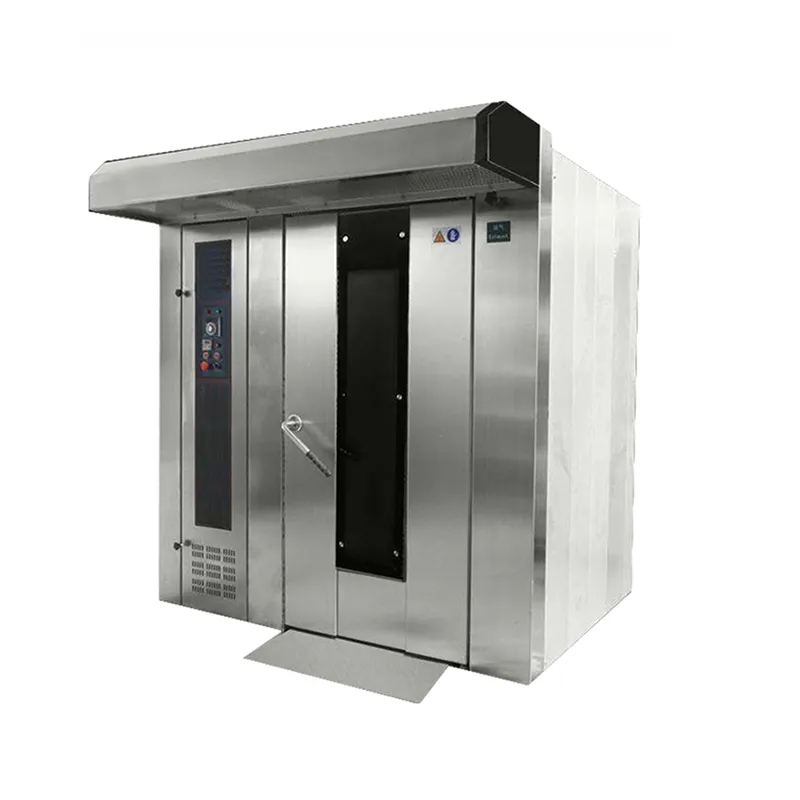
- Bake precision. Consistent bake-out moisture and a controlled steam cycle give every batch the same starting water activity. This is a specification question—steam injection quality and temperature stability across the rack—which is why ovens are specified carefully, as in the rotary oven with its adjustable steam system.
- Cooling discipline. Packing warm product traps condensation and guarantees mold at the seam. Cool fully, every batch, before it reaches the bag.
- Packaging. Modified atmosphere packaging and good seal integrity replace a large part of the preservative's job; a reliable automatic flow packing machine with consistent seals is part of the shelf-life specification, not an afterthought.
- Hygiene. Environmental mold load decides how much headroom the preservative used to buy. Tighter cleaning schedules and equipment designed for washdown move the baseline.
- Distribution honesty. The remaining gap is closed commercially: shorter loops, frozen par-baked inventory, or honest date codes. A shorter shelf life has real logistics consequences, and pretending otherwise is how clean-label launches fail.
The waste angle deserves attention here: a shorter shelf life raises the cost of every unsold unit, which makes yield and waste discipline more important, not less. Our article on reducing bakery waste covers the measurement side.
What Does Clean Label Demand From Equipment?
The common thread in every replacement above is that process tolerance replaces chemical tolerance. Additives are forgiving: they absorb recipe drift, flour variation, and temperature swings. Remove them and the line has to hold its windows tighter:
- Weighing and mixing consistency—the fermentation can't compensate for a flour-to-water ratio that drifts between batches.
- Temperature control—dough temperature at every stage, because natural fermentation windows are narrow.
- Baking uniformity—browning is now a flavor ingredient, not a cosmetic, so top-to-bottom consistency matters commercially.
- Gentle handling—delicate, high-hydration doughs punish rough transfer, and rejects eat the premium that clean label earns.
- Hygienic design—cleanable surfaces and accessible frames keep environmental mold load down without preservatives.
Where batter products are part of the range, density control matters for the same reason: an industrial cake aeration system holds batter density at target so texture comes from control rather than from stabilizers. Across the plant, this is why clean-label conversions are best planned as a line review rather than a recipe swap—the same logic as our guide to the turnkey bakery production line, where process capability is designed before equipment is quoted.
Is Clean Label Worth the Cost?
Honest accounting, with all figures illustrative: ingredient costs typically rise when functional ingredients replace additives, fermentation time raises capacity requirements, and shelf life may shorten. Against that: label-driven products command premium positioning in most retail channels, and consumer research across the industry consistently shows a substantial share of shoppers willing to pay more for shorter, readable labels—particularly for family purchases. The projects that succeed are the ones that decide the trade-offs deliberately: which tier of clean label to target, which shelf life to commit to, and which distribution model closes the gap. The ones that fail treat it as a label rewrite.
What Should You Tell Your Equipment Supplier?
- The clean-label tier you're targeting: which additive categories leave the recipe, and which stay.
- Products in scope, with piece weights and current recipes where available.
- The shelf-life commitment you must keep, and the current distribution loop.
- Whether fermentation is changing: bulk times, sourdough or levain stages, hydration levels.
- Output per hour and shift pattern—long fermentation changes the capacity math.
- Hygiene requirements and washdown expectations.
With those six answers, a supplier can review the process route before quoting machines—which is the only order in which clean label bread production works.
Final Thought
Clean label is a promise about the label that is kept—or broken—by the process. The fermentation schedule replaces the emulsifier, the bake precision and the packaging replace the preservative, and the mixing consistency replaces the improver. None of these replacements is free, but all of them are buildable with ordinary industrial equipment when the process is designed as a whole. Decide the tier, commit to the shelf life, then specify the line to match.
Process-Driven Equipment from Haopai
Haopai builds the equipment that carries process-driven recipes: spiral dough mixers sized to consistent batch work, rotary rack ovens with controlled steam and adjustable airflow for uniform browning, and flow packing machines with the seal consistency that packaging-based shelf life depends on. These are available individually or within complete bakery production lines—see our bread production line range for the full configuration. Haopai equipment is CE and ISO certified, with overseas installation and after-sales support.
Planning a Clean-Label Conversion?
Send the products in scope, the additives you want off the label, and the shelf life you must keep, and we'll return a process route—fermentation, baking, and packaging—with the equipment configuration behind it, rather than a machine list.
Share to:


