Cookie Production Line: Sections, Forming Methods and Layout Explained
What an industrial cookie production line includes section by section, how wire cutting, rotary moulding and depositing differ, how to size capacity, and how to lay out the line in a real building.
2026/11/25
Reading volume: 0
News Details
Summary: An industrial cookie production line is a chain of seven decisions, not a single machine: mixing, feeding, forming, baking, cooling, stacking and packing. The decision that shapes everything else is the forming method — wire-cut, rotary moulding or depositing — because it fixes the dough type, the product range and the speed of every section downstream. This guide walks through each section, compares the three forming methods, shows the capacity calculation, and covers the layout questions buyers usually leave too late.
In this guide: the sections of a line, which forming method fits which product, capacity calculation, tunnel versus batch ovens, what happens between the oven and the packing table, layout planning, and what to send for a quotation.
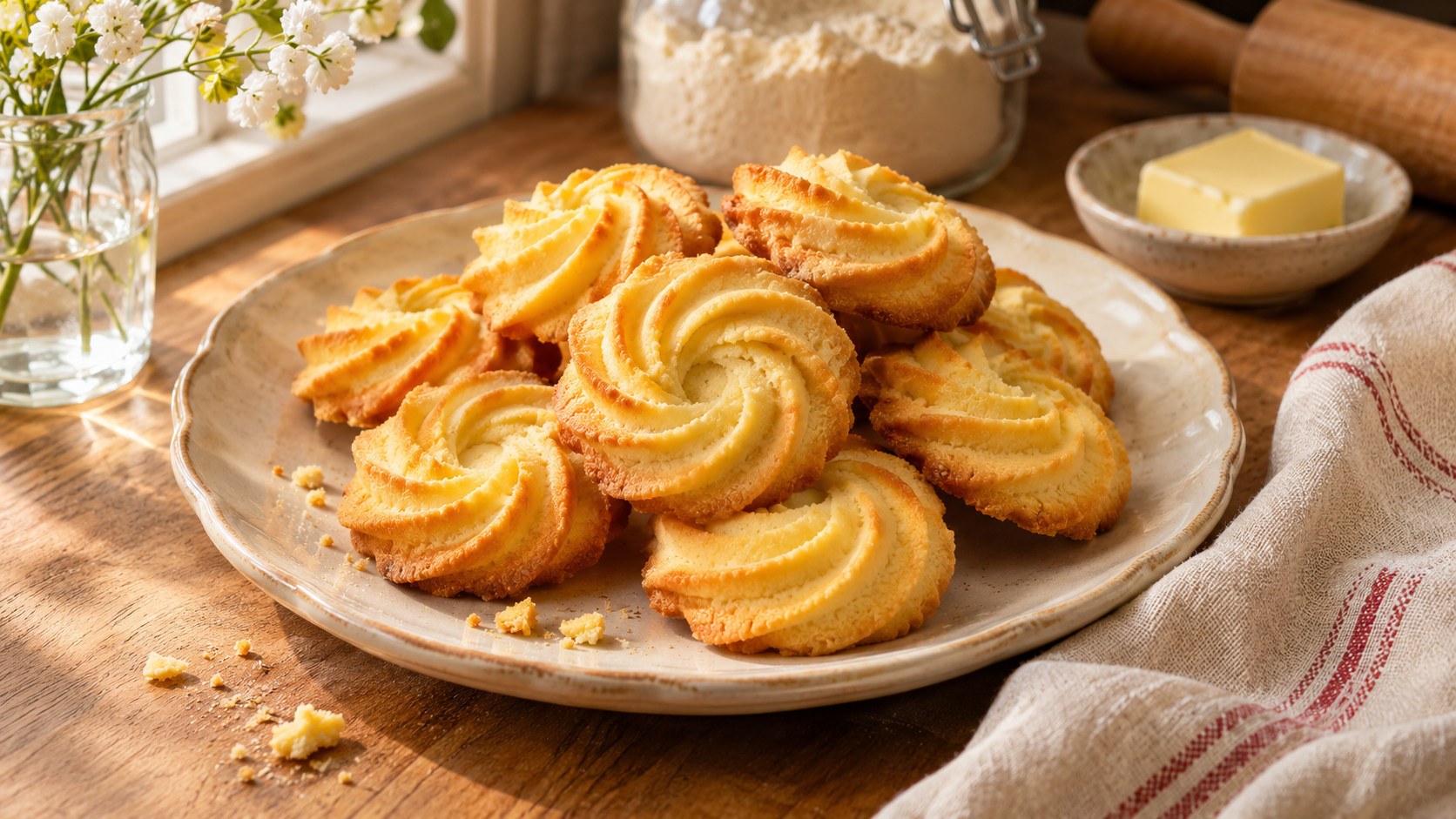
What Are the Sections of an Industrial Cookie Production Line?
Working backwards from the box the customer buys, every cookie line contains the same functional sections — the exact machines vary with the product:
- Mixing — planetary or horizontal mixers sized to the batch; cookie doughs are short and fatty, so development targets are different from bread.
- Feeding — dough trucks, tippers and transfer conveyors that move dough without working it further.
- Forming — wire-cut machines, rotary moulders or depositors, depending on the product (see the comparison below).
- Baking — a tunnel oven for continuous flow, or a batch rack oven for mixed products and shorter runs.
- Cooling — ambient or forced-air conveyors that bring product from around 150 °C at exit to below 40 °C before packing.
- Stacking and counting — star-wheel or discrepancy stackers that arrange pieces into rows for the packaging machine.
- Packing — flow wrapping into pillow packs, tray packs or family packs, usually with checkweighing and metal detection.
Supplier quotations differ less in the machine list than in how honestly these sections are matched to each other — which is where the cookie production line either runs or bottlenecks.
Wire-Cut, Rotary Moulding or Depositing — Which Forming Method Fits Your Product?
Forming is the first real fork in the road. The dough decides the machine:
| Method | Dough and product fit | Changeover | Watch-outs |
|---|---|---|---|
| Wire-cut | Soft, sticky doughs with chips or inclusions — chocolate chip, oat, butter cookies | Fast: swap the die and the recipe | Piece weight depends on dough consistency; mixing stability matters |
| Rotary moulding | Stiff, short doughs with defined shapes and embossing — moulded biscuits | Roller and mould change | Not for inclusions; shape fidelity depends on dough stiffness |
| Depositing | Soft and extruded products, two- and three-colour cookies, fillable centres | Nozzle plate and programme | Pressure and stroke must be programmable per recipe |
Many plants combine methods rather than choose once: a butter cookie depositor that extrudes and wires covers a wider product range than either a pure moulder or a pure depositor. Our cookie depositor buying guide compares the machine-level options in detail.
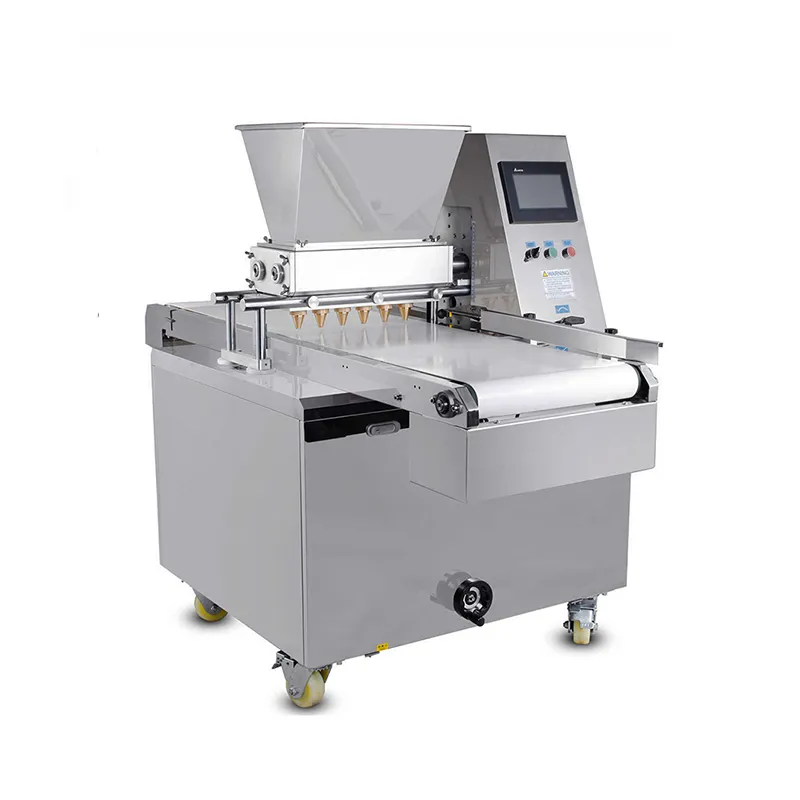
How Do You Calculate Cookie Line Capacity?
Two multiplications size most lines:
- Forming output (pieces/min) = strokes per minute × pieces per stroke
- Line output (kg/h) = pieces per minute × piece weight (kg) × 60 × line efficiency
Illustrative example, with all figures assumed: a depositor running 40 strokes per minute with 24 pieces per stroke produces 960 pieces a minute. At a 15 g piece weight that is 14.4 kg per minute, or 864 kg/h at nameplate speed. At a realistic line efficiency of 0.75 — changeovers, minor stops, packaging pacing — the same line delivers roughly 650 kg/h of packed product. This gap between nameplate and actual output is the single most common disappointment in cookie line projects, and it is why the efficiency assumption, not the machine maximum, should be written into the quotation.
Oven length follows from the same arithmetic: bake time multiplied by line speed gives the required oven length, which is why tunnel ovens are quoted from 10 to 90 metres depending on capacity. A batch option changes the maths — see the next section.
Tunnel Oven or Batch Oven for Cookies?
Continuous output at a single profile points to a tunnel oven. But cookies are the product category where batch baking keeps winning, for three reasons:
- Range. A plant running butter cookies in the morning, maamoul or kahk mid-shift and mooncakes in season needs profiles a tunnel cannot switch fast enough to serve. A rotary oven with adjustable steam and airflow handles all of them on separate programmes.
- Volume. Mid-size plants rarely sustain the run lengths a tunnel amortises at.
- Floor space. A rack oven grows upward; a tunnel grows along a wall that the building may not have.
The honest rule: a tunnel rewards one product at high volume; a batch oven rewards range and changeover. The project-level view of how this choice reshapes the rest of the plant is covered in our guide to the turnkey bakery production line.
What Happens Between the Oven and the Packing Table?
This stretch of the line causes more complaints than the oven, because it is where hot product meets plastic film:
- Cooling. Product exits at around 150 °C and must reach below 40 °C before packing, or condensation forms inside the bag and shelf life collapses. Cooling conveyor length is a specification, not an accessory.
- Stacking. Star-wheel or discrepancy stackers turn a single file of cookies into counted rows. Rows that arrive ragged wreck wrapping speed downstream.
- Packing. The automatic flow packing machine sets the pace for the whole line — bag length, seal integrity and counts per minute decide whether upstream speed is usable.
- Quality control. Checkweighing and metal detection belong at the packing station; a consistent overweight across all pieces points back to forming, which is the giveaway logic covered in our article on reducing bakery waste.
How Should a Cookie Production Line Be Laid Out?
Good cookie production line layout is decided on paper, while moving a machine still costs nothing. Four questions decide most drawings:
- Product path. Linear is simplest, but a 90° or 180° curve conveyor after the oven can compress a long line into a shorter building — worth asking for when floor plates are tight.
- Ceiling and services. Cooling conveyors stack; ovens need hoods and exhaust; mixers need power and water points placed where the machines will actually stand.
- Hygiene zoning. Mixing and forming are wet zones; baking is hot; packing should sit in the cleanest end of the room, away from dough dust.
- Expansion. A second forming line feeding the same oven, or a second packing machine, is a layout decision before it is a purchase decision.
For the utility and capacity planning that should happen before drawings are issued, see the layout and utility stage of our turnkey guide above.
What Should You Send for a Quotation?
- Product list: cookie types, piece weights, sizes, inclusions.
- Target output in kg/h of packed product — and the shift pattern behind it.
- Forming method preferred, or the products that force the choice.
- Heat source available on site: electric, gas or diesel.
- Factory drawing with dimensions, ceiling height, columns and drainage.
- Packing format: pillow pack, tray pack or family pack, and any weight-compliance limits.
With those six items, a supplier quotes a balanced line instead of a machine list.
Final Thought
A cookie line is judged in its quietest sections. The depositor gets the attention, but the cooling length, the stacker alignment and the packing pace decide whether nameplate output ever reaches the shipping door. Size every section from your piece weights and your realistic efficiency, choose the forming method your dough demands rather than the one on sale, and lay the line out before you buy it.
Cookie Lines from Haopai
Haopai builds cookie and cake equipment as complete, balanced lines: extruding and wire-cut depositors for butter cookies and filled products, rotary rack ovens for mixed product ranges, and flow packing machines matched to the line's real pace. See the full cake and cookies machine range — CE and ISO certified, with overseas installation and after-sales support.
Planning a Cookie Line?
Send your product list, piece weights and target packed output, and we will return a section-by-section configuration with the capacity calculation behind it.
Share to:


